The Rising Imperative of Digital Resilience and Audit Readiness in the Modern Enterprise
Rick Lemieux – Co-Founder and Chief Product Officer of the DVMS Institute
In today’s hyperconnected economy, digital enterprises operate in an environment defined by constant change, increasing complexity, and escalating risk. Organizations rely heavily on digital systems to deliver products, manage operations, and engage customers. As a result, disruptions, whether caused by cyberattacks, system failures, regulatory shifts, or operational breakdowns, can have immediate and far-reaching consequences.
Against this backdrop, digital resilience and audit readiness have emerged as top strategic priorities. They are no longer optional compliance exercises or IT concerns; they are foundational capabilities that determine an organization’s ability to survive, adapt, and thrive.
Understanding Digital Resilience
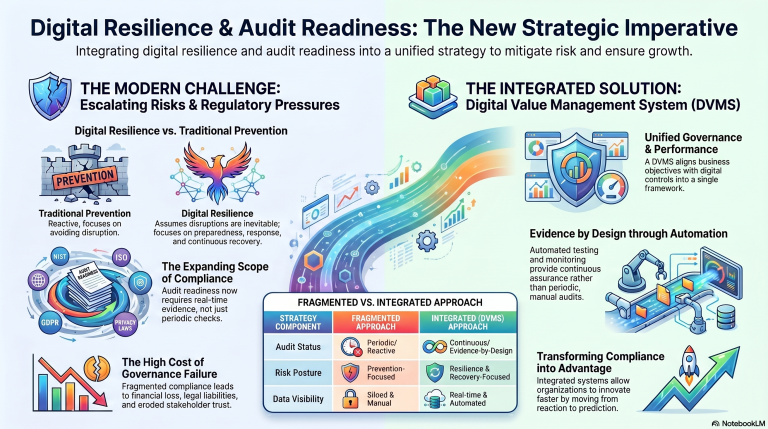
Digital resilience refers to an organization’s ability to anticipate, withstand, recover from, and adapt to adverse digital events. Unlike traditional risk management, which often focuses on prevention, digital resilience assumes that disruptions are inevitable. It emphasizes preparedness, response, and continuous improvement. This includes robust cybersecurity measures, reliable infrastructure, data integrity, and the ability to maintain critical operations under stress.
The importance of digital resilience has grown as enterprises adopt cloud computing, distributed architectures, and interconnected ecosystems. These advancements increase agility and innovation but also introduce new vulnerabilities. A single point of failure—whether in a third-party vendor, a misconfigured system, or a compromised identity—can cascade across the organization. Digital resilience ensures that such events do not cripple the enterprise, enabling service continuity and protecting stakeholder trust.
The Expanding Scope of Audit Readiness
Audit readiness, traditionally associated with financial reporting, has expanded significantly in the digital age. Today, organizations must demonstrate compliance with a wide range of regulatory frameworks, cybersecurity standards, privacy laws, and industry-specific requirements. These include frameworks such as NIST CSF, ISO standards, GDPR, and sector-specific regulations.
Audit readiness is not just about passing an audit; it is about maintaining continuous compliance and transparency. Regulators, customers, and partners increasingly expect real-time assurance that systems are secure, processes are controlled, and data is handled responsibly. This requires organizations to maintain accurate documentation, enforce consistent controls, and provide verifiable evidence of compliance at any given moment.
Why These Priorities Are Converging
Digital resilience and audit readiness are deeply interconnected. A resilient organization is inherently better prepared for audits because it has structured processes, defined controls, and clear accountability. Conversely, organizations that prioritize audit readiness often build stronger resilience through disciplined governance and continuous monitoring.
The convergence of these priorities is driven by several factors. First, regulatory pressure is intensifying, with stricter enforcement and higher penalties for non-compliance. Second, cyber threats are becoming more sophisticated, targeting not just data but operational continuity. Third, stakeholders, including investors, customers, and boards, are demanding greater transparency and assurance.
In this environment, organizations cannot afford to treat resilience and compliance as separate initiatives. They must be integrated into a unified approach to digital governance, risk management, and performance.
The Cost of Failure
The consequences of failing to prioritize digital resilience and audit readiness are severe. Cyber incidents can result in financial losses, reputational damage, and legal liabilities. Operational disruptions can halt production, delay services, and erode customer trust. Compliance failures can lead to fines, sanctions, and loss of market access.
Beyond immediate impacts, there are long-term implications. Organizations that lack resilience struggle to innovate because they are constantly reacting to crises. Those that are not audit-ready face ongoing scrutiny and uncertainty, which can hinder growth and strategic decision-making. In contrast, organizations that excel in these areas gain a competitive advantage by demonstrating reliability, trustworthiness, and operational excellence.
The Role of Leadership and Culture
Achieving digital resilience and audit readiness requires more than technology; it demands strong leadership and a culture of accountability. Executives must recognize these priorities as strategic imperatives and allocate resources accordingly. This includes investing in modern infrastructure, skilled personnel, and integrated governance frameworks.
Equally important is fostering a culture where resilience and compliance are embedded in everyday operations. Employees at all levels must understand their roles in maintaining controls, managing risks, and responding to incidents. This cultural alignment ensures that resilience and audit readiness are not siloed functions but shared responsibilities across the enterprise.
Technology as an Enabler
Technology plays a critical role in enabling both digital resilience and audit readiness. Advanced monitoring tools, automation, and analytics provide real-time visibility into systems and processes. These capabilities allow organizations to detect anomalies, respond to incidents, and maintain continuous compliance.
Automation is particularly important in reducing manual effort and minimizing errors. For example, automated control testing, continuous auditing, and real-time reporting can significantly enhance efficiency and accuracy. By leveraging technology, organizations can move from reactive approaches to proactive, predictive risk management.
How The DVMS Solves This Problem
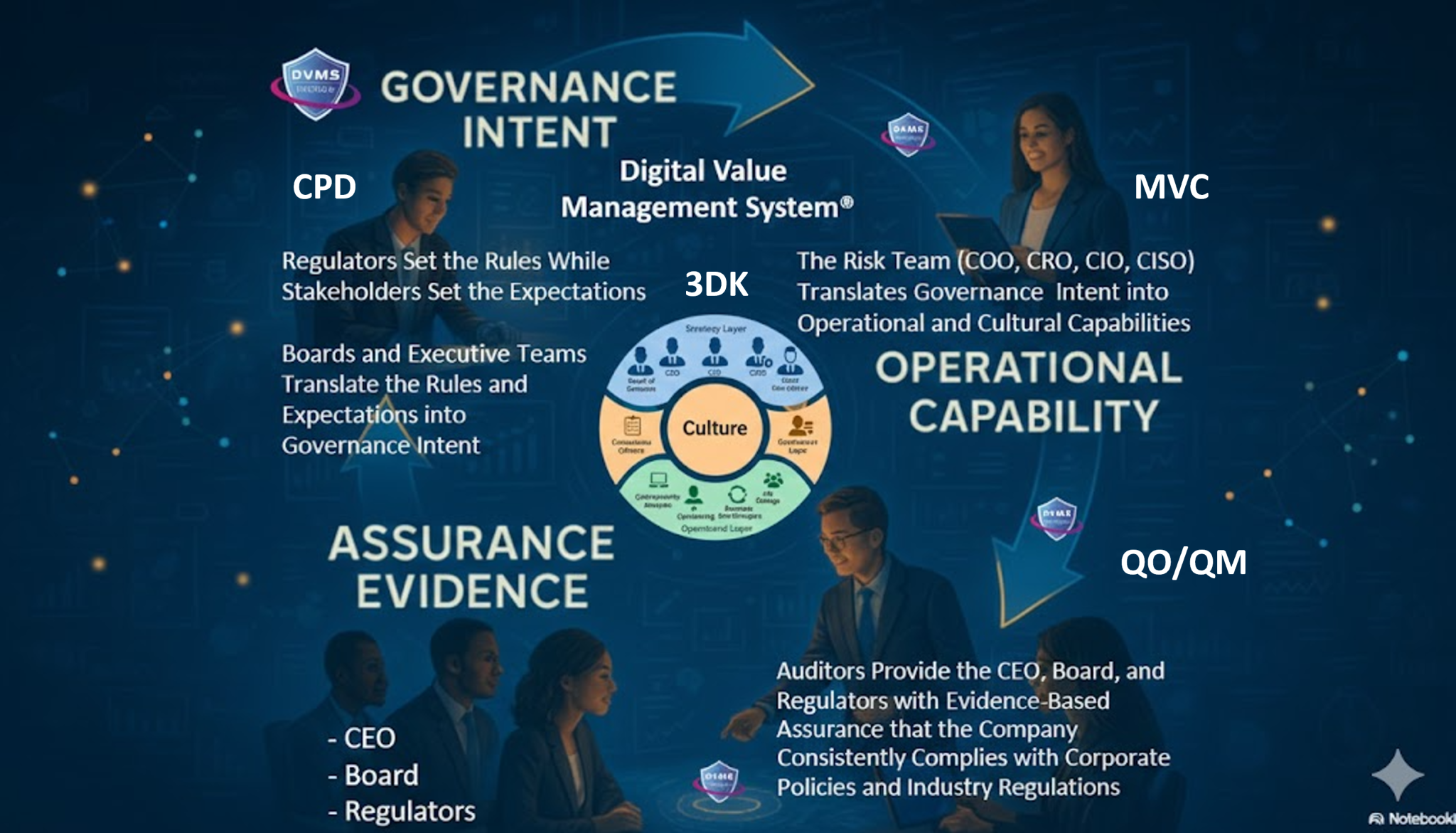
The Digital Value Management System® (DVMS) provides a comprehensive solution to the challenges of digital resilience and audit readiness by integrating governance, risk, compliance, and performance management into a unified framework. Unlike traditional approaches that rely on fragmented tools and manual processes, the DVMS creates a structured, end-to-end system for managing digital operations and ensuring accountability.
At its core, the DVMS aligns business objectives with digital controls and performance metrics. It enables organizations to define clear policies, map them to operational processes, and continuously monitor outcomes. This alignment ensures that resilience is built into the organizational fabric rather than treated as an afterthought. For audit readiness, the DVMS provides traceability and evidence by design. Every control, process, and action is documented and measurable, making it easier to demonstrate compliance during audits.
Additionally, the DVMS supports continuous improvement by providing insights into performance gaps and risk exposures. Organizations can identify weaknesses, implement corrective actions, and track progress over time. This dynamic capability transforms audit readiness from a periodic exercise into an ongoing state of assurance. By integrating resilience and compliance into a single system, the DVMS not only reduces complexity but also enhances transparency, efficiency, and trust.
Building a Future-Ready Enterprise
As digital transformation continues to accelerate, the importance of digital resilience and audit readiness will only grow. Emerging technologies such as artificial intelligence, the Internet of Things, and decentralized systems will introduce new opportunities and risks. Organizations must be prepared to navigate this evolving landscape with confidence and agility.
Building a future-ready enterprise requires a holistic approach that combines strategy, technology, and culture. Digital resilience ensures the organization can withstand and adapt to disruptions, while audit readiness provides the assurance needed to operate in a regulated, trust-driven environment. Together, they form the foundation of sustainable digital success.
Conclusion
In the modern digital enterprise, resilience and audit readiness are no longer optional; they are essential. They mitigate risks, support compliance, and build trust with stakeholders. More importantly, they empower organizations to innovate and grow in an increasingly complex and uncertain world. By adopting integrated approaches such as DVMS and fostering a culture of accountability, enterprises can transform these priorities into strategic advantages. The result is not just survival in the face of disruption, but the ability to lead and excel in the digital age.
About the Author

Rick Lemieux
Co-Founder and Chief Product Officer of the DVMS Institute
Rick has 40+ years of passion and experience creating solutions to give organizations a competitive edge in their service markets. In 2015, Rick was identified as one of the top five IT Entrepreneurs in the State of Rhode Island by the TECH 10 awards for developing innovative training and mentoring solutions for boards, senior executives, and operational stakeholders.
Digital Value Management System® is a registered trademark of the DVMS Institute LLC.
® DVMS Institute 2026 All Rights Reserved