Trust and Resilience in the Modern Digital Enterprise
Rick Lemieux – Co-Founder and Chief Product Officer of the DVMS Institute
Introduction
In today’s interconnected economy, organizations operate within increasingly complex digital ecosystems shaped by cloud computing, artificial intelligence, cybersecurity threats, global supply chains, remote workforces, and rapidly evolving customer expectations. The modern digital enterprise is no longer defined solely by its products or services, but by its ability to maintain confidence, continuity, and adaptability amid constant disruption. Within this environment, trust and resilience have emerged as two of the most critical strategic capabilities required for sustainable success.
Trust represents the confidence that stakeholders place in an organization’s systems, decisions, leadership, security, and operational integrity. Customers trust enterprises to protect their data, employees trust leadership to guide responsibly, partners trust systems to function reliably, and regulators trust organizations to comply with legal and ethical standards. Resilience, by contrast, refers to the enterprise’s ability to anticipate, withstand, recover from, and adapt to disruptions while maintaining essential functions and strategic objectives.
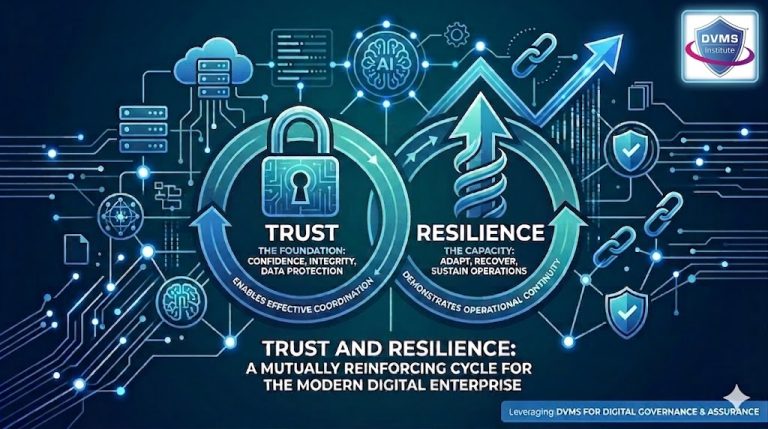
Although trust and resilience are often discussed separately, they are deeply interconnected. Trust enables resilience because organizations with trusted leadership, transparent governance, and reliable systems can coordinate more effectively during crises. At the same time, resilience reinforces trust because stakeholders gain confidence when enterprises demonstrate the ability to continue operating despite disruption. Together, trust and resilience form a mutually reinforcing cycle that enables digital enterprises to thrive in uncertainty rather than merely survive it.
Digital Enterprise and Rising Complexity
The digital enterprise operates in an environment characterized by high interdependence and accelerating change. Organizations rely on distributed infrastructures, third-party vendors, cloud service providers, software ecosystems, and real-time data exchanges that span geographic and organizational boundaries. While these interconnected systems create efficiency and innovation, they also introduce vulnerabilities and operational complexity.
Cyberattacks, ransomware incidents, data breaches, system outages, misinformation campaigns, and geopolitical disruptions can impact operations instantly and globally. At the same time, stakeholders expect uninterrupted service, ethical data management, rapid response, and transparent communication. A single failure can damage a reputation, erode customer confidence, and lead to long-term financial consequences.
This complexity means that traditional approaches focused solely on efficiency or short-term optimization are no longer sufficient. Enterprises must now design systems that are both trustworthy and resilient. They must create digital environments where reliability, adaptability, security, and accountability are embedded into governance and operations from the beginning.
Trust as the Foundation of Digital Operations
Trust is the invisible infrastructure that supports every digital interaction. Without trust, customers hesitate to share information, employees disengage, investors lose confidence, and partnerships weaken. In digital enterprises, trust extends beyond interpersonal relationships and becomes embedded within technology, governance, and organizational behavior.
Cybersecurity is one of the clearest examples of trust in action. Customers expect organizations to protect personal and financial information from unauthorized access. When a company suffers a data breach or fails to secure its systems, trust can collapse rapidly. Rebuilding that trust may take years and require significant operational and financial investment.
Trust also depends on transparency and ethical decision-making. As organizations adopt artificial intelligence and automated systems, stakeholders increasingly expect enterprises to explain how decisions are made, how data is used, and how risks are managed. Enterprises that demonstrate accountability and openness create stronger stakeholder confidence and reduce uncertainty during periods of change.
Leadership trust is equally important. Employees are more likely to support transformation initiatives, respond effectively during crises, and collaborate across functions when they trust organizational leadership. Trust fosters communication, engagement, and alignment, all of which are essential for navigating disruption successfully.
Ultimately, trust reduces friction within the enterprise ecosystem. It enables faster collaboration, stronger partnerships, improved customer loyalty, and more effective crisis response. In this sense, trust becomes a strategic asset rather than merely a social or reputational characteristic.
Resilience as the Capacity to Adapt and Recover
Resilience is the enterprise’s ability to sustain operations under stress while continuing to evolve in response to emerging threats and opportunities. Historically, resilience was associated primarily with disaster recovery and business continuity planning. Today, however, resilience has expanded into a broader organizational capability encompassing cybersecurity, operational continuity, supply chain adaptability, workforce flexibility, and strategic agility.
Digital resilience requires enterprises to anticipate disruptions before they occur. This involves proactive risk management, continuous monitoring, threat intelligence, scenario planning, and adaptive governance. Organizations must understand how failures in one area can cascade across interconnected systems and business functions.
A resilient enterprise can recover quickly from disruptions. Recovery is not simply about restoring technology systems; it involves restoring confidence, maintaining stakeholder communication, and preserving operational integrity. Enterprises that recover effectively often do so because resilience has been integrated into organizational culture rather than treated as a standalone technical function.
Adaptability is another defining feature of resilience. Digital enterprises face constant technological and market evolution. Organizations that cannot adapt quickly risk becoming obsolete. Resilient enterprises embrace learning, innovation, and continuous improvement as part of their operational identity. They use disruption as an opportunity to evolve rather than merely return to previous conditions.
Importantly, resilience is not the absence of failure. Instead, it is the capacity to continue functioning despite failure, uncertainty, or adversity. This distinction is critical because modern digital systems are too complex to guarantee perfect prevention. What matters most is the ability to absorb shocks while preserving trust and mission continuity.
The Interdependence of Trust and Resilience
Trust and resilience reinforce one another in powerful ways. Without trust, resilience efforts often fail because stakeholders do not believe the organization can manage crises effectively. Without resilience, trust eventually deteriorates because repeated failures undermine confidence.
During cybersecurity incidents, for example, organizations that communicate transparently and respond decisively often retain greater customer trust even when disruptions occur. Stakeholders understand that incidents are sometimes unavoidable in complex digital environments. What they evaluate is how responsibly and competently the enterprise responds.
Similarly, resilient systems strengthen trust because reliability creates confidence. Customers trust digital banking platforms that remain operational during high-demand periods. Employees trust organizations that support them during crises. Investors trust enterprises that demonstrate operational continuity despite market disruptions.
Trust also accelerates organizational recovery. Teams collaborate more effectively when they trust leadership and one another. Partners share information more openly when relationships are strong. Customers remain loyal when organizations demonstrate honesty and accountability during difficult situations.
This interdependence creates a feedback loop. Strong trust improves resilience capabilities, while demonstrated resilience strengthens stakeholder trust. Enterprises that cultivate both capabilities simultaneously achieve greater stability, adaptability, and long-term competitiveness.
Building Trust and Resilience Through Governance
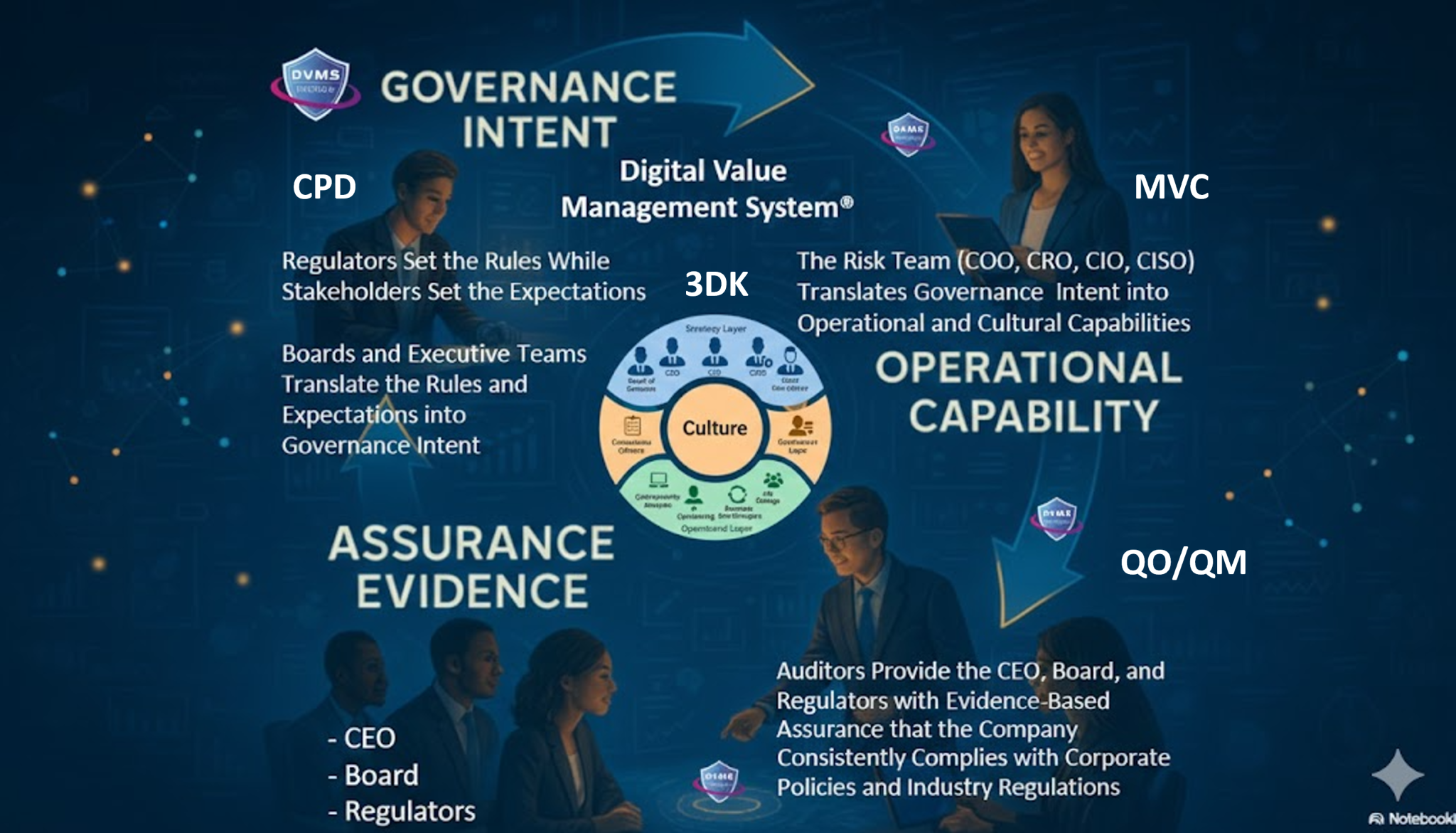
Effective governance plays a central role in integrating trust and resilience across the digital enterprise. Governance establishes the structures, policies, accountability mechanisms, and decision-making processes that guide organizational behavior under both normal and disrupted conditions.
Frameworks such as the NIST Cybersecurity Framework and enterprise resilience models emphasize the importance of governance in aligning technology, risk management, operations, and strategic objectives. Governance ensures that resilience is not confined to IT departments but is embedded across the entire organization.
Strong governance promotes transparency, accountability, and continuous improvement. It enables organizations to identify vulnerabilities, measure performance, manage digital risk, and align operational activities with stakeholder expectations. Governance also supports ethical technology adoption by ensuring that innovation does not compromise trust.
Culture is equally important. Enterprises that encourage collaboration, learning, adaptability, and shared responsibility are better positioned to maintain trust and resilience. Employees at every level must understand their role in protecting systems, managing risk, and supporting operational continuity.
DVMS as an Enabler of Trust and Resilience
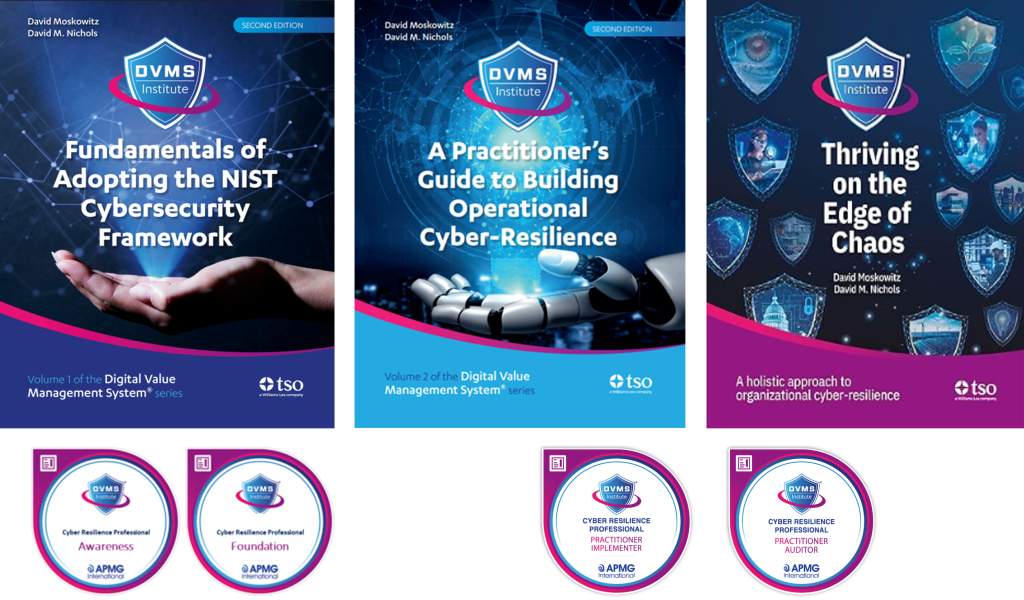
The Digital Value Management System (DVMS) enables trust and resilience by creating a structured governance overlay system that aligns digital operations, risk management, performance assurance, and strategic decision-making across the enterprise.
Through its integrated approach, DVMS establishes transparency, accountability, and measurable operational control, allowing stakeholders to have confidence in the organization’s ability to manage digital complexity effectively. By continuously monitoring value delivery, operational dependencies, cybersecurity posture, and business performance, DVMS helps organizations identify vulnerabilities before they escalate into disruptions. At the same time, it strengthens resilience by enabling adaptive response mechanisms, cross-functional coordination, and continuous improvement across digital ecosystems.
This combination of visibility, governance, and operational assurance allows enterprises to maintain continuity during periods of disruption while preserving stakeholder trust, making DVMS a foundational capability for sustainable digital business operations in an increasingly uncertain and interconnected world.
Conclusion
In the modern digital enterprise, trust and resilience are no longer optional organizational qualities; they are foundational requirements for survival and growth. Digital enterprises operate in environments defined by uncertainty, complexity, and constant disruption. In such conditions, organizations cannot rely solely on efficiency, scale, or technological advancement. They must also cultivate stakeholder confidence and operational adaptability.
Trust enables enterprises to build strong relationships, reduce uncertainty, and coordinate effectively across complex ecosystems. Resilience enables organizations to withstand disruptions, recover rapidly, and adapt continuously to changing conditions. Together, these capabilities create a powerful strategic advantage that supports long-term sustainability and competitive strength.
As digital transformation accelerates, enterprises that successfully integrate trust and resilience into governance, culture, technology, and operations will be better prepared to navigate future challenges. They will not only protect value during crises but also create the confidence and agility necessary to innovate, grow, and lead in an increasingly interconnected world.
About the Author

Rick Lemieux
Co-Founder and Chief Product Officer of the DVMS Institute
Rick has 40+ years of passion and experience creating solutions to give organizations a competitive edge in their service markets. In 2015, Rick was identified as one of the top five IT Entrepreneurs in the State of Rhode Island by the TECH 10 awards for developing innovative training and mentoring solutions for boards, senior executives, and operational stakeholders.
Digital Value Management System® is a registered trademark of the DVMS Institute LLC.
® DVMS Institute 2026 All Rights Reserved