Bridging ITIL Gaps Through Digital Governance: How a DVMS Drives Service Management Excellence
Rick Lemieux – Co-Founder and Chief Product Officer of the DVMS Institute
Introduction: Aligning Service Management with Business Value
Organizations increasingly rely on structured frameworks to manage IT services effectively and align them with strategic business objectives. The Information Technology Infrastructure Library (ITIL) provides widely accepted best practices for IT service management (ITSM), helping organizations deliver reliable, value-driven services. However, many organizations struggle to determine how closely their current practices align with ITIL guidance. This is where gap analysis becomes essential. A gap analysis compares an organization’s current state with a desired future state, identifying deficiencies in processes, governance, performance measurement, and accountability.
The Digital Value Management System® (DVMS) provides a structured, governance-driven approach that significantly enhances the effectiveness of ITIL gap analysis. By integrating governance, performance management, risk management, and value realization into a cohesive system, DVMS enables organizations not only to identify gaps but to systematically close them in a measurable and sustainable way.
Understanding ITIL Gap Analysis
ITIL gap analysis is the structured assessment of existing IT service management practices against ITIL’s best practice guidance. Organizations typically evaluate areas such as service strategy, service design, service transition, service operation, and continual improvement (or, in ITIL 4, service value system components such as governance, service value chain, practices, and continual improvement).
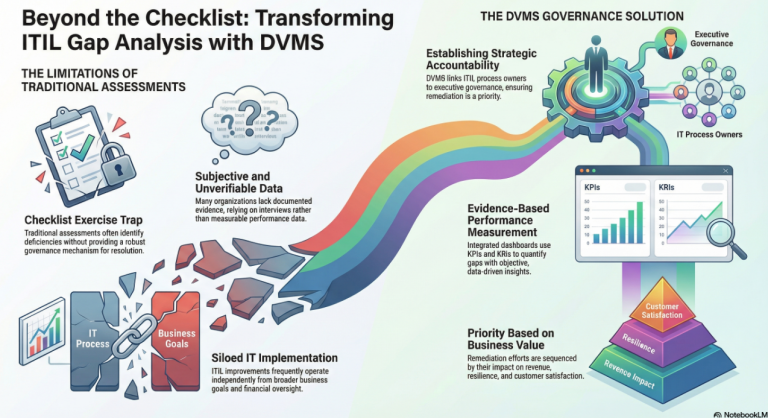
The objective is to identify process weaknesses, undefined roles, insufficient controls, ineffective metrics, and misalignments with customer value expectations. However, traditional ITIL gap assessments often become checklist exercises that identify deficiencies without providing a robust governance mechanism to address them. Without structured oversight, performance tracking, and accountability, identified gaps can remain unresolved. DVMS enhances this process by embedding ITIL gap analysis within a broader digital governance and performance framework.
DVMS as a Governance Foundation for ITIL Alignment
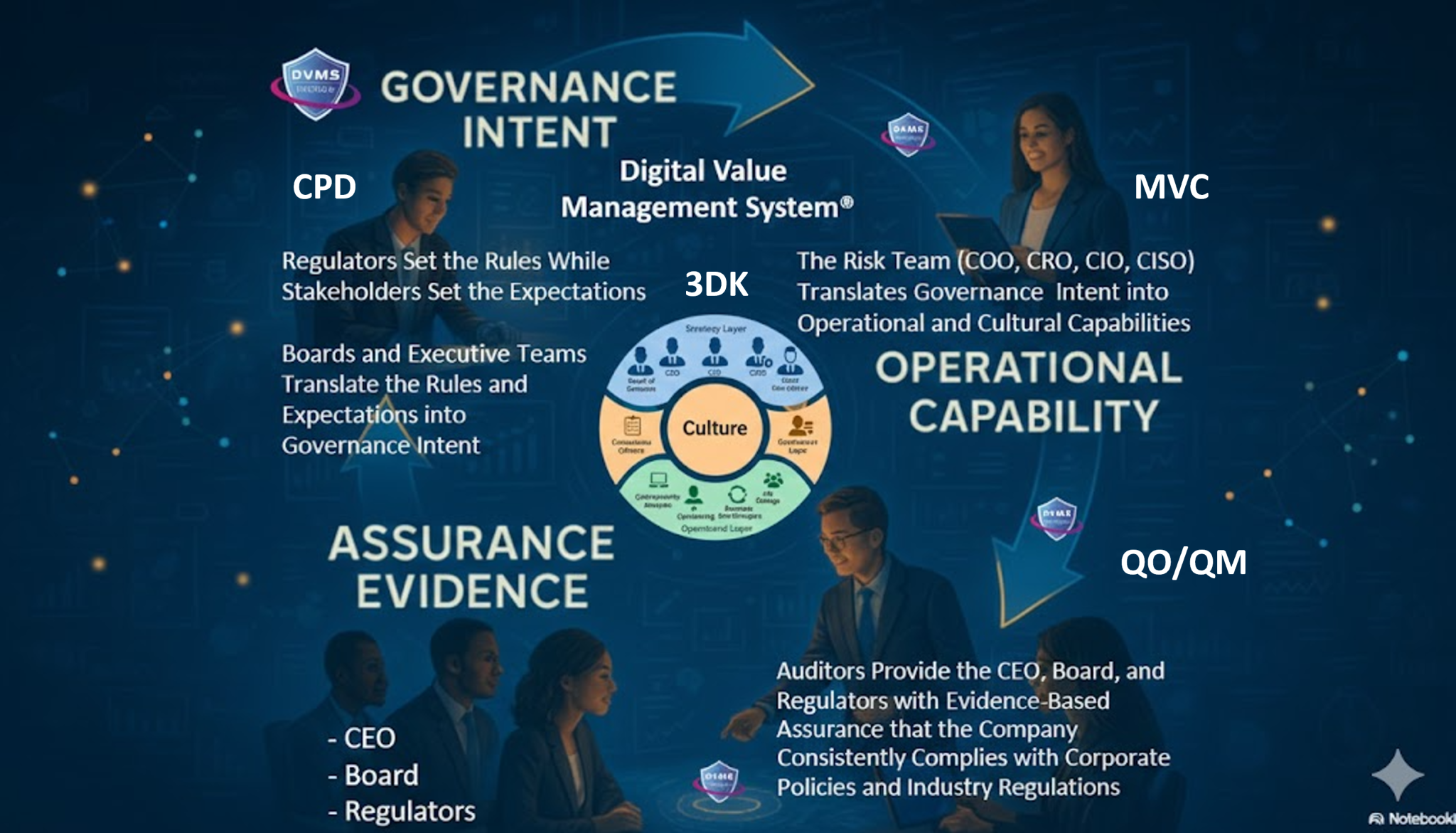
The DVMS establishes a governance structure that defines accountability, decision rights, and performance expectations across digital operations. Governance is central to both ITIL and effective gap remediation. When conducting an ITIL gap analysis, organizations often discover unclear ownership of processes, fragmented decision-making, or inconsistent enforcement of policies. The DVMS addresses these structural weaknesses by clarifying roles, responsibilities, and escalation pathways. It ensures that IT service management processes are not merely documented but governed through formal oversight mechanisms. By linking ITIL process owners to executive-level governance structures, DVMS ensures that gap remediation becomes a strategic priority rather than a siloed IT initiative. This alignment elevates ITIL from operational best practice to enterprise-level governance discipline.
Structured Performance Measurement and Evidence-Based Assessment
One of the most common weaknesses uncovered in ITIL gap analysis is the absence of meaningful performance metrics. Organizations may have processes in place, but they lack evidence demonstrating that those processes are effective. DVMS integrates performance management into the core of digital operations. It defines measurable objectives, key performance indicators (KPIs), key risk indicators (KRIs), and outcome-based metrics that reflect business value. During an ITIL gap assessment, DVMS provides structured evidence, performance dashboards, audit trails, and documented controls, that allows evaluators to assess maturity objectively. Instead of relying on interviews and subjective judgment alone, organizations can leverage data-driven insights to quantify gaps. This evidence-based approach strengthens the credibility of the gap analysis and supports more precise remediation planning.
Linking ITIL Processes to Business Value
A frequent challenge in ITIL adoption is demonstrating how service management improvements translate into business value. ITIL emphasizes value co-creation, but organizations often struggle to measure it. DVMS explicitly connects digital initiatives and operational processes to value realization and strategic outcomes. When performing a gap analysis, organizations using DVMS can evaluate ITIL practices not only against compliance criteria but also against their contribution to performance assurance and operational resilience. For example, incident management is assessed not just for procedural adherence but for its impact on service availability, customer satisfaction, and revenue protection. By embedding value management into ITIL gap analysis, DVMS ensures that remediation efforts prioritize high-impact improvements that strengthen organizational performance.
Risk Management and Operational Resilience
ITIL encourages proactive risk management, yet many organizations discover during gap analysis that risk identification and mitigation are inconsistently applied across service processes. DVMS integrates risk management into digital governance, ensuring that IT service risks are systematically identified, assessed, monitored, and controlled. When evaluating ITIL practices such as change management, service continuity, or supplier management, DVMS provides a structured risk framework that highlights control deficiencies and vulnerability exposures. This integration deepens gap analysis by revealing not only process weaknesses but also resilience risks. As a result, organizations can prioritize remediation based on risk exposure and potential business impact, strengthening both compliance and operational stability.
Continuous Improvement Embedded in Organizational Culture
ITIL 4 places significant emphasis on continual improvement, yet sustaining improvement initiatives often prove difficult. Gap analyses may be conducted periodically, but corrective actions may stall due to competing priorities or lack of follow-through. DVMS institutionalizes continuous improvement through defined review cycles, performance audits, management reviews, and corrective action tracking. Identified ITIL gaps are logged, assigned ownership, tracked through performance dashboards, and reviewed at governance forums. This structured oversight ensures accountability and transparency. Over time, this systematic approach builds a culture of disciplined improvement, where ITIL alignment is not a one-time project, but an ongoing management responsibility embedded within organizational routines.
Enhancing Transparency and Audit Readiness
Many organizations pursue ITIL alignment to improve audit readiness, regulatory compliance, or stakeholder confidence. A DVMS strengthens transparency by documenting processes, controls, metrics, and decision-making records in a unified management system. During ITIL gap analysis, auditors and assessors can access documented evidence of governance controls, performance reviews, risk assessments, and improvement initiatives. This traceability reduces ambiguity and supports defensible maturity ratings. Furthermore, because DVMS aligns digital management activities with enterprise governance standards, organizations can demonstrate that ITIL practices are integrated into broader corporate oversight mechanisms. This enhances credibility with regulators, customers, and executive leadership.
Cross-Functional Integration and Collaboration
ITIL implementation often encounters challenges when IT operates independently from other business functions. Gap analyses frequently reveal breakdowns in communication between IT, operations, finance, and executive leadership. DVMS promotes cross-functional integration by linking digital service management to enterprise governance, strategic planning, and performance reporting. ITIL gaps related to service level agreements, financial management, or supplier oversight can be addressed collaboratively within DVMS governance forums. This cross-functional alignment ensures that remediation efforts consider operational, financial, and strategic implications. By breaking down silos, DVMS transforms ITIL gap analysis into an enterprise-wide improvement initiative rather than a narrowly scoped IT exercise.
Enabling Maturity Progression Through Structured Roadmaps
An effective ITIL gap analysis does not merely identify deficiencies; it establishes a roadmap toward higher maturity. DVMS supports this progression by providing structured planning frameworks, defined milestones, and measurable targets. Organizations can categorize gaps according to maturity levels, risk exposure, and value impact, then sequence remediation initiatives accordingly. DVMS ensures that improvement projects are resourced, monitored, and evaluated against predefined objectives. This disciplined roadmap approach reduces the likelihood of stalled initiatives and helps organizations steadily progress toward optimized ITIL maturity levels. Over time, the organization builds a repeatable methodology for assessing, improving, and sustaining service management excellence.
DVMS Links Operational Integrity to Enterprise Value
Conclusion: From Gap Identification to Value Realization
An ITIL gap analysis is a critical step in strengthening IT service management, but its effectiveness depends on how gaps are governed, prioritized, and resolved.
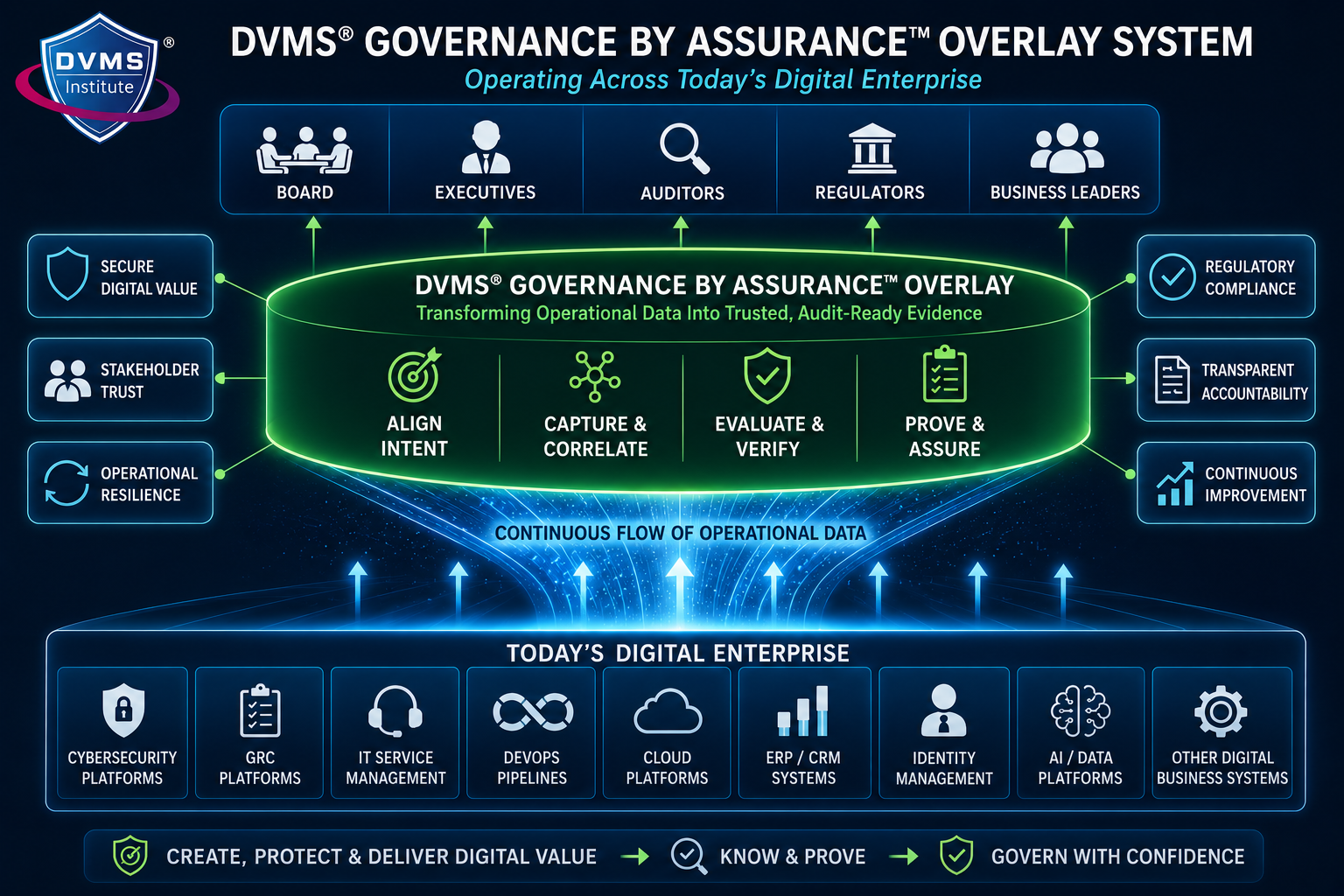
The Digital Value Management System enhances this process by embedding governance, performance measurement, risk management, and value realization into a cohesive overlay system. Rather than treating ITIL alignment as a compliance exercise, DVMS transforms gap analysis into a strategic management tool that drives operational resilience, transparency, and measurable business value. By providing structure, accountability, and evidence-based oversight, DVMS ensures that identified gaps lead to sustained improvements. In doing so, organizations move beyond simply conforming to ITIL best practices and toward building a digitally governed enterprise capable of delivering consistent, high-value services in an increasingly complex environment.

Rick Lemieux
Co-Founder and Chief Product Officer of the DVMS Institute
Rick has 40+ years of passion and experience creating solutions to give organizations a competitive edge in their service markets. In 2015, Rick was identified as one of the top five IT Entrepreneurs in the State of Rhode Island by the TECH 10 awards for developing innovative training and mentoring solutions for boards, senior executives, and operational stakeholders.
Digital Value Management System® is a registered trademark of the DVMS Institute LLC.
® DVMS Institute 2026 All Rights Reserved