DVMS – From Audit Readiness to Assurance by Design
Rick Lemieux – Co-Founder and Chief Product Officer of the DVMS Institute
Introduction: Bridging the Gap Between Implementation and Audit
In today’s complex digital enterprises, the relationship between implementers and auditors is often characterized by friction, inefficiency, and rework. Implementers build systems, controls, and processes with the intent of meeting regulatory and organizational requirements, yet audits frequently uncover gaps leading to remediation cycles, delays, and increased costs. This dynamic reflects a fundamental disconnect between how systems are implemented and how assurance is evaluated.
A Digital Value Management System® (DVMS) addresses this disconnect by embedding evidence-based assurance and accountability directly into the design and operation of digital systems. By doing so, DVMS enables implementers to meet auditor requirements on the first try, transforming audits from reactive inspections into predictable validations of performance and control effectiveness.
Redefining Assurance: From Periodic Audits to Continuous Validation
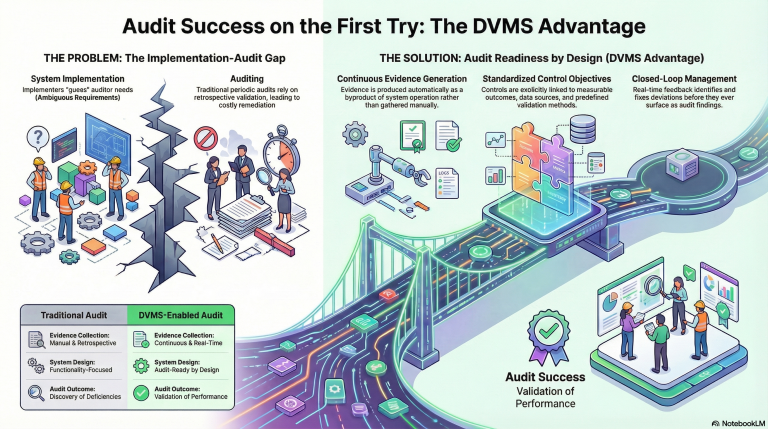
At its core, DVMS redefines the role of assurance. Traditional approaches rely heavily on periodic audits, manual evidence collection, and retrospective validation. Implementers often interpret requirements, deploy controls, and then wait for auditors to assess whether those controls meet expectations. This process is inherently inefficient because it separates implementation from assurance.
DVMS eliminates this separation by making assurance an integral part of the system itself. Evidence is not gathered after the fact; it is continuously generated as a byproduct of system operation. This shift ensures that implementers are not guessing what auditors will require; they are producing verifiable evidence aligned with those requirements from the outset.
Standardizing Controls and Evidence: Eliminating Ambiguity
One key mechanism by which DVMS achieves this is the standardization of control objectives and evidence models. In a DVMS, controls are not loosely defined activities but are explicitly linked to measurable outcomes and associated evidence.
Each control is designed with a clear understanding of what constitutes proof of effectiveness. This includes defining the data sources, metrics, thresholds, and validation methods that demonstrate whether the control is functioning as intended. By embedding these definitions into the system design, implementers gain clarity on what needs to be built and how success will be measured. As a result, the ambiguity that often leads to audit findings is significantly reduced.
Continuous Assurance: Aligning with Auditor Expectations
In addition to standardizing controls and evidence, DVMS establishes a continuous assurance model that aligns closely with auditor expectations. Auditors are increasingly focused on the reliability, completeness, and timeliness of evidence.
DVMS addresses these concerns by automating the collection and validation of evidence in real time. This includes capturing system logs, performance metrics, control execution data, and other relevant artifacts in a structured and auditable manner. Because this evidence is continuously generated and validated, implementers can demonstrate control effectiveness at any point in time, rather than relying on snapshots or manual compilations. This continuous assurance capability not only meets auditor requirements but also enhances confidence in the system’s integrity.
Establishing Accountability: Ensuring Ownership and Consistency
Another critical factor in meeting auditor requirements on the first try is establishing clear accountability. In many organizations, audit findings arise not from the absence of controls but from unclear ownership and inconsistent execution.
DVMS addresses this issue by defining explicit roles, responsibilities, and decision rights for each control and process. Accountability is not abstract; it is tied to specific outcomes and supported by evidence. Implementers know who is responsible for what, and auditors can trace actions and decisions back to accountable individuals or teams. This transparency reduces the likelihood of gaps and ensures that controls are consistently applied and maintained.
Creating a Common Language: Aligning Implementers and Auditors
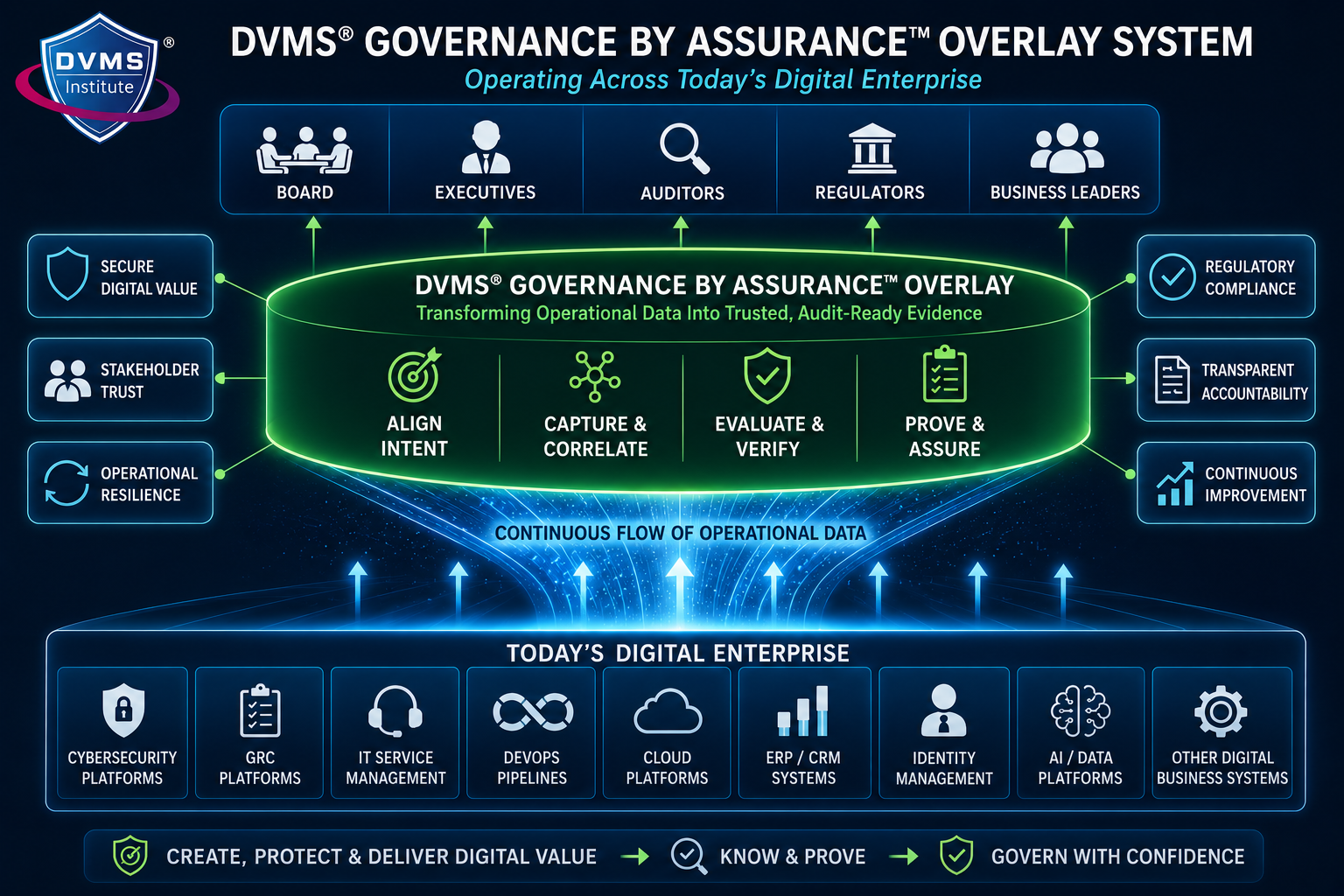
DVMS also enhances alignment between implementers and auditors by providing a common overlay system and language. One challenge in traditional audit processes is the gap in perspective between those who build systems and those who evaluate them. Implementers may focus on functionality and performance, while auditors emphasize compliance and risk mitigation.
DVMS bridges this gap by integrating governance, performance, and assurance into a unified model. Both implementers and auditors operate within the same overlay system, using the same definitions, metrics, and evidence. This alignment minimizes misunderstandings and ensures that expectations are clearly communicated and consistently applied.
Audit Readiness by Design: Building Systems That Prove Themselves
Furthermore, DVMS supports the concept of “audit readiness by design.” Instead of preparing for audits as a separate activity, implementers design systems that are inherently auditable. This includes incorporating features such as traceability, logging, version control, and data integrity checks into the system architecture. Every action, decision, and outcome is recorded in a way that can be easily reviewed and validated.
When auditors engage, they are not faced with fragmented or incomplete information; they have access to a comprehensive and well-structured evidence base. This reduces the time and effort required for audits and increases the likelihood of a successful outcome on the first attempt.
Closed-Loop Management: Preventing Issues Before They Surface
The ability of DVMS to enable first-time audit success is further strengthened by its closed-loop management model. In this model, evidence is continuously analyzed to identify deviations, weaknesses, or opportunities for improvement. When issues are detected, corrective actions are implemented and tracked to completion, with new evidence generated to confirm their effectiveness.
This continuous feedback loop ensures that systems remain aligned with requirements and that any gaps are addressed proactively before auditors identify them. As a result, audits become confirmations of a well-functioning system rather than discoveries of deficiencies.
Scalability and Adaptability: Keeping Pace with Change
Another important advantage of DVMS is its scalability and adaptability. Modern digital enterprises operate in environments characterized by rapid change, evolving regulations, and increasing complexity. Traditional audit preparation methods struggle to keep pace with these dynamics, often resulting in outdated controls or incomplete evidence.
DVMS, by contrast, is designed to adapt to change. Its modular and configurable architecture allows implementers to update controls, evidence models, and processes as requirements evolve. This flexibility ensures that systems remain compliant and auditable, even amid shifting conditions.
Organizational Impact: Beyond Audit Success
In addition to improving audit outcomes, DVMS delivers broader organizational benefits. Embedding assurance into everyday operations reduces the burden of audit preparation and frees up resources for more strategic activities. It also enhances decision-making by providing reliable, real-time insights into system performance and risk. Perhaps most importantly, it fosters a culture of accountability and continuous improvement, where quality and compliance are integral to how work is performed, rather than being imposed externally.
Conclusion: From Audit Readiness to Assurance by Design
A Digital Value Management System® (DVMS) fundamentally transforms the relationship between implementers and auditors. By integrating evidence-based assurance and accountability into the design and operation of digital systems, implementers can meet auditor requirements on the first try.
Through standardized controls, continuous evidence generation, clear accountability, and a unified overlay system, DVMS eliminates the ambiguity and inefficiency that often lead to audit failures. It shifts audits from reactive, resource-intensive exercises to predictable validations of a well-governed system. In doing so, DVMS not only improves audit outcomes but also strengthens the overall performance, resilience, and value of modern digital enterprises.
About the Author

Rick Lemieux
Co-Founder and Chief Product Officer of the DVMS Institute
Rick has 40+ years of passion and experience creating solutions to give organizations a competitive edge in their service markets. In 2015, Rick was identified as one of the top five IT Entrepreneurs in the State of Rhode Island by the TECH 10 awards for developing innovative training and mentoring solutions for boards, senior executives, and operational stakeholders.
Digital Value Management System® is a registered trademark of the DVMS Institute LLC.
® DVMS Institute 2026 All Rights Reserved