Governing Operational Resilience in Modern Digital Enterprises
Rick Lemieux – Co-Founder and Chief Product Officer of the DVMS Institute
Introduction: Reframing Operational Resilience as Digital Value
In modern digital enterprises, operational resilience is no longer a standalone objective confined to risk management or cybersecurity functions. Instead, it has become a critical dimension of digital value performance, shaping how organizations deliver, sustain, and protect value in increasingly complex and interdependent ecosystems. A Digital Value Management System® (DVMS) provides a structured and integrated approach to achieving this shift.
By applying evidence-based assurance and explicit accountability, DVMS enables organizations to govern operational resilience not as a reactive capability, but as a measurable, managed, and continuously optimized component of value creation. This reframing is essential in an era where disruptions are inevitable, and the ability to sustain performance under stress directly impacts organizational success.
The DVMS Paradigm: From Control to Value Governance
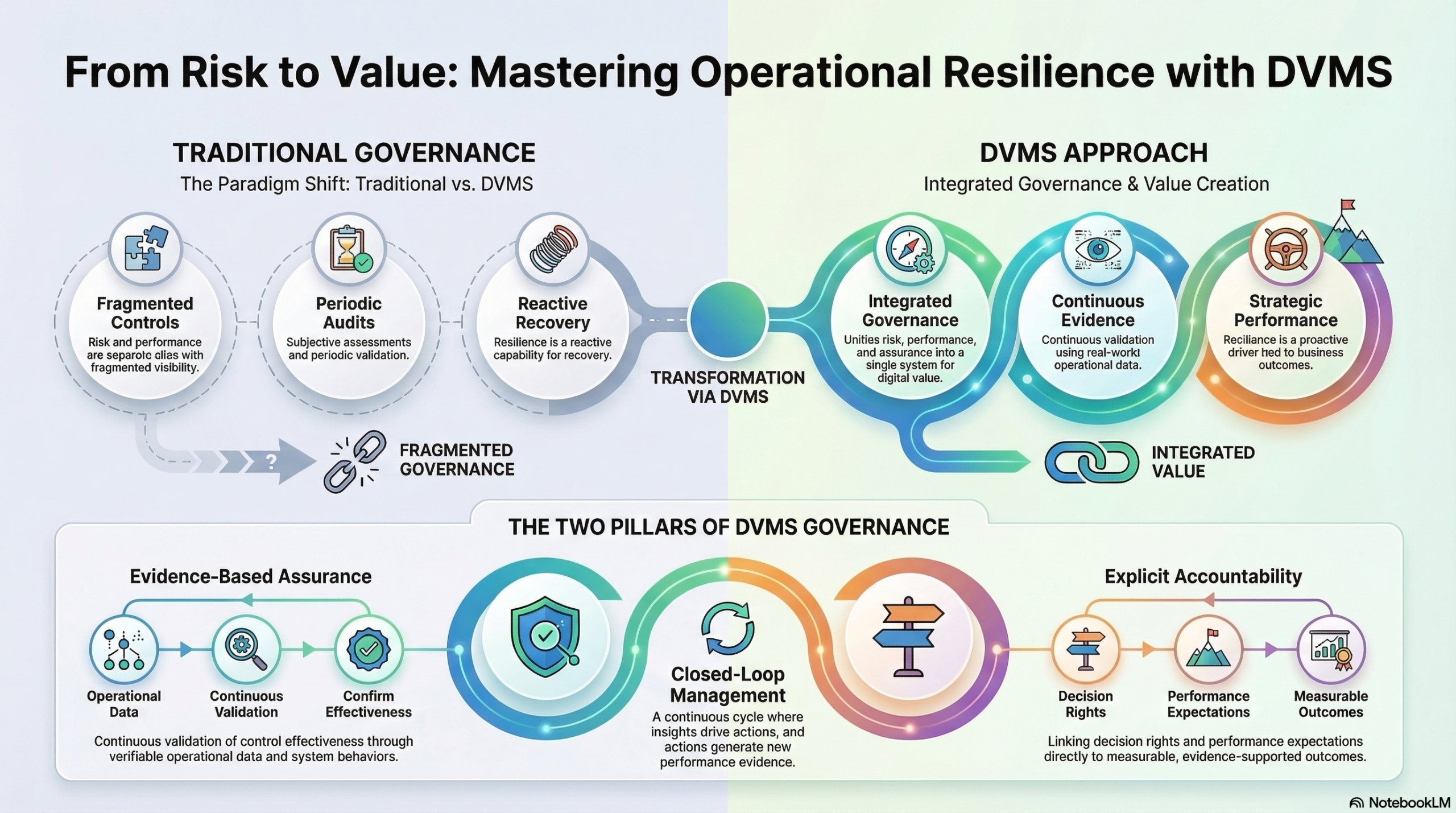
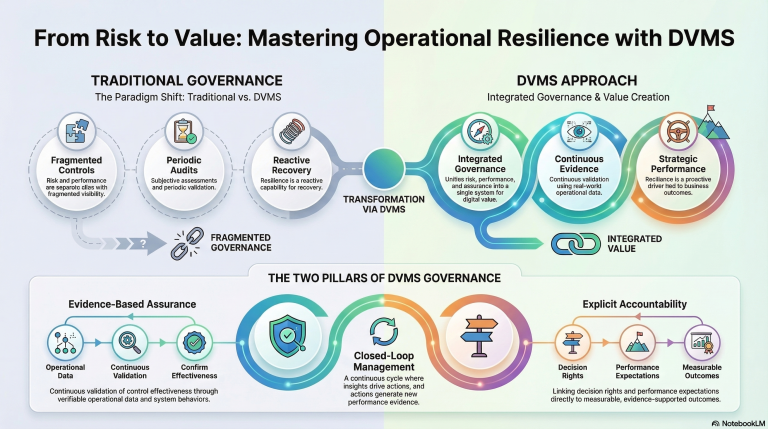
Traditional management systems often treat governance, risk, performance, and assurance as separate domains, leading to fragmentation and limited visibility into how decisions affect overall value. DVMS fundamentally changes this paradigm by integrating these domains into a unified management system focused on digital value. Within this framework, operational resilience is not an isolated control objective but a governed outcome embedded in value streams and performance metrics.
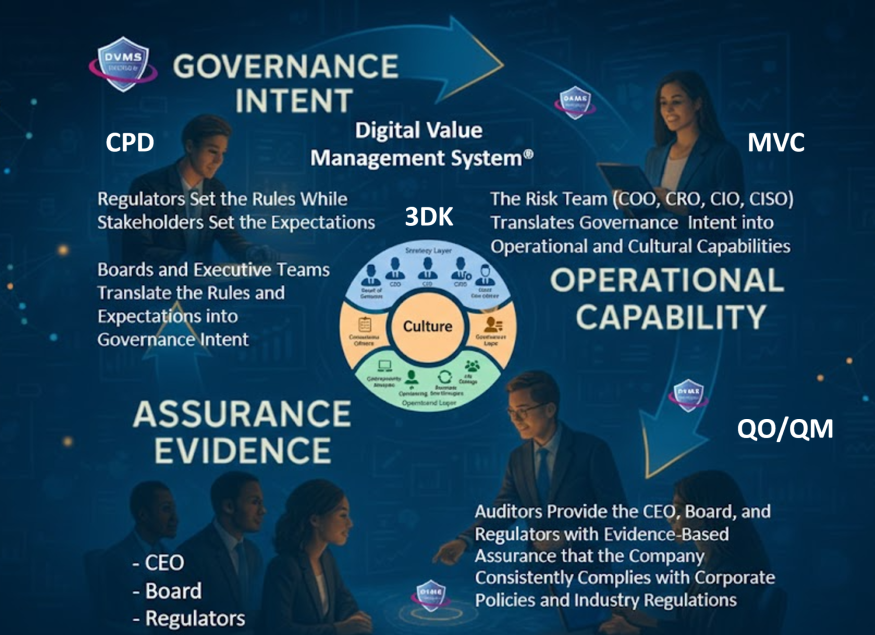
DVMS aligns governance structures, decision rights, and performance objectives with the overarching goal of value realization and protection. It ensures that resilience is considered alongside efficiency, innovation, and growth, rather than as a trade-off. This integration allows organizations to make informed decisions that balance risk and reward, supported by evidence rather than assumptions. As a result, resilience becomes a proactive, strategic capability directly tied to business outcomes.
Evidence-Based Assurance: The Core Operating Mechanism
At the heart of DVMS is the principle of evidence-based assurance. Unlike traditional approaches that rely on periodic audits or subjective assessments, DVMS emphasizes continuous validation of performance through verifiable evidence. This evidence is derived from operational data, control effectiveness, system behaviors, and outcome measurements, creating a transparent and objective foundation for decision-making.
Evidence-based assurance transforms how organizations understand and manage resilience. Instead of asking whether controls are in place, DVMS asks whether those controls are demonstrably effective in sustaining performance under varying conditions. This shift enables organizations to detect weaknesses early, respond to emerging risks dynamically, and continuously improve their resilience posture.
Moreover, evidence is not static; it is continuously collected, analyzed, and linked to performance outcomes. This creates a closed-loop system where insights drive actions, and actions generate new evidence. In this way, DVMS ensures that resilience is not only measured but actively governed through ongoing validation and refinement.
Accountability: Linking Decisions to Outcomes
Accountability is the second critical pillar of DVMS. In many organizations, accountability for resilience is diffused, with responsibilities spread across multiple functions and limited clarity on ownership. DVMS addresses this challenge by establishing clear lines of accountability that connect decisions, actions, and outcomes.
Within a DVMS, accountability is not merely about assigning responsibility; it is about ensuring that individuals and teams are answerable for the performance and resilience of the value they deliver. This includes defining roles, decision rights, and performance expectations, and linking them to measurable outcomes supported by evidence.
By integrating accountability with evidence-based assurance, DVMS creates a powerful governance mechanism. Decision-makers are equipped with reliable information and are held accountable for the results of their decisions. This alignment fosters a culture of ownership and transparency, where resilience is actively managed rather than passively monitored.
Governing Operational Resilience as a Performance Dimension
One of the most significant contributions of DVMS is elevating operational resilience to a core dimension of digital value performance. In this context, resilience is not simply the ability to recover from disruptions but the capacity to sustain and adapt performance in the face of uncertainty.
DVMS achieves this by embedding resilience metrics into performance frameworks, value streams, and reporting structures. These metrics are designed to reflect the organization’s ability to maintain service levels, protect critical assets, and respond effectively to disruptions. By integrating these measures with other performance indicators, DVMS ensures that resilience is considered in all aspects of value delivery.
This approach also enables organizations to quantify the impact of resilience on value. For example, the ability to prevent downtime, mitigate risks, and recover quickly from incidents can directly link to financial performance, customer satisfaction, and competitive advantage. As a result, resilience becomes a tangible, measurable contributor to value rather than an abstract concept.
Integration Across Complex Digital Ecosystems
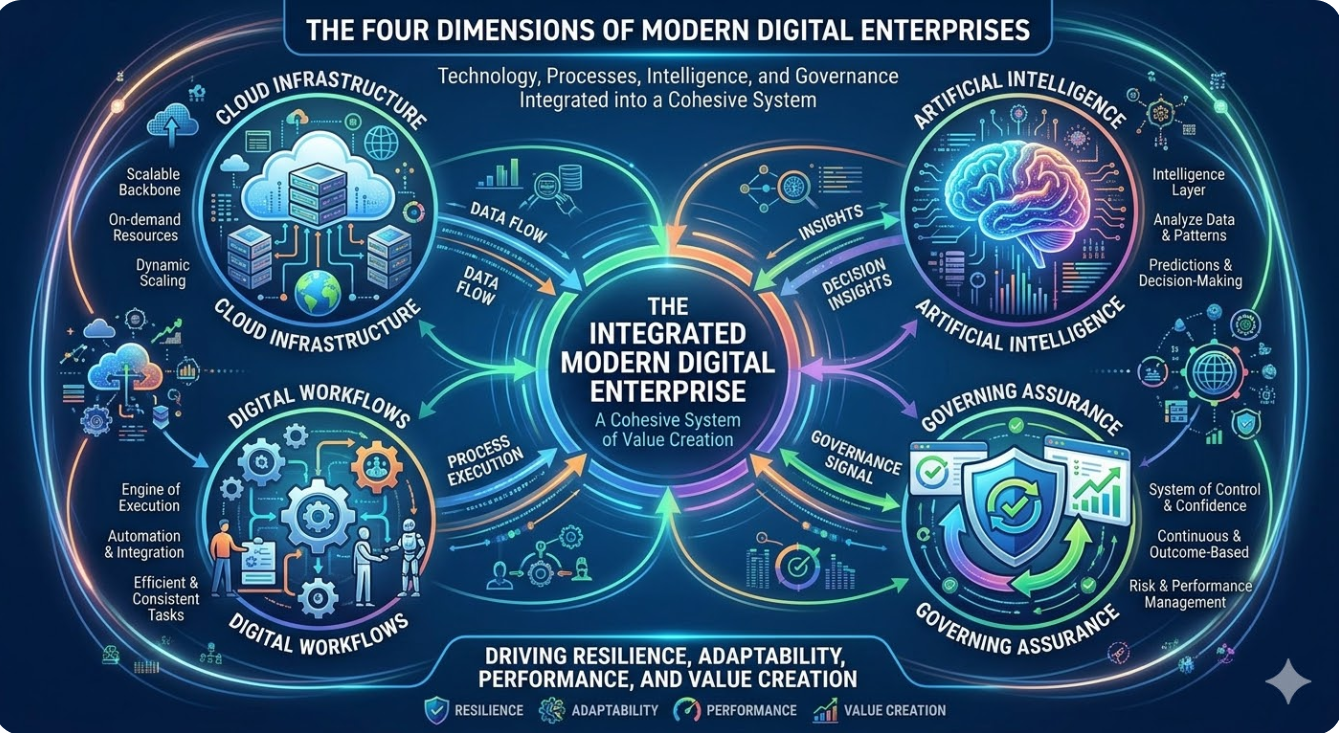
Modern digital enterprises operate within highly interconnected ecosystems that include cloud, workflow, and AI platforms, third-party services, supply chains, and distributed technologies. These environments introduce new challenges for resilience, as disruptions can propagate across boundaries and dependencies.
DVMS addresses this complexity by providing a holistic view of the ecosystem and its interdependence. Through evidence-based assurance, organizations can assess the resilience of individual components and their interactions. This enables them to identify systemic risks, prioritize interventions, and ensure resilience across the entire value chain.
Furthermore, DVMS supports integrating resilience considerations into design, development, and operational processes. By embedding resilience into the lifecycle of digital services, organizations can build systems that are inherently robust and adaptable. This proactive approach reduces the likelihood of disruptions and enhances the organization’s ability to respond when they occur.
Continuous Improvement Through Closed-Loop Management
A defining characteristic of DVMS is its closed-loop management model. This model ensures that governance, performance, assurance, and accountability are continuously aligned and optimized. Evidence is used to assess current performance, identify gaps, and inform decisions, while accountability ensures that actions are taken and outcomes are achieved.
This continuous feedback loop enables organizations to adapt to changing conditions and evolving risks. It also supports a culture of learning and improvement, where insights are systematically captured and applied. Over time, this leads to a more resilient and agile organization, capable of sustaining value in dynamic environments.
Importantly, closed-loop management also enhances trust and confidence among stakeholders. By demonstrating that resilience is actively governed and continuously improved, organizations can build credibility with customers, regulators, and partners.
Strategic Implications for Modern Enterprises
The adoption of a DVMS has significant strategic implications for modern digital enterprises. It shifts the focus from compliance and control to value and performance, enabling organizations to align resilience with their strategic objectives. This alignment is critical in a landscape where digital capabilities are central to competitive advantage.
By integrating resilience into value performance, DVMS also supports better investment decisions. Organizations can prioritize initiatives that enhance both performance and resilience, ensuring that resources are allocated effectively. Additionally, the transparency provided by evidence-based assurance and accountability enables more informed and confident decision-making at all levels.
Ultimately, DVMS positions operational resilience as a strategic enabler rather than a cost center. It allows organizations to navigate uncertainty, seize opportunities, and deliver sustained value in an increasingly complex and unpredictable world.
DVMS – The Foundation for Resilient Value
A Digital Value Management System® (DVMS) provides a comprehensive and integrated approach to governing operational resilience as a dimension of digital value performance. Through evidence-based assurance and clear accountability, it transforms resilience from a reactive capability into a proactive and measurable outcome.
By embedding resilience into governance, performance, and decision-making processes, DVMS enables organizations to sustain and enhance value amid disruption. Its closed-loop management model ensures continuous improvement, while its holistic perspective addresses the complexities of modern digital ecosystems.
As digital enterprises continue to evolve, the ability to govern resilience as part of value performance will become increasingly critical. DVMS offers a powerful framework for achieving this goal, providing the structure, discipline, and insight needed to thrive in a dynamic and uncertain modern digital enterprise.
About the Author

Rick Lemieux
Co-Founder and Chief Product Officer of the DVMS Institute
Rick has 40+ years of passion and experience creating solutions to give organizations a competitive edge in their service markets. In 2015, Rick was identified as one of the top five IT Entrepreneurs in the State of Rhode Island by the TECH 10 awards for developing innovative training and mentoring solutions for boards, senior executives, and operational stakeholders.
Digital Value Management System® is a registered trademark of the DVMS Institute LLC.
® DVMS Institute 2026 All Rights Reserved