NIST CSF Adoption- Why Organizations Must Govern for Resilient, Assured, and Accountable Outcomes
Rick Lemieux – Co-Founder and Chief Product Officer of the DVMS Institute
Introduction: NIST CSF as a Driver of Business Model Transformation
The NIST Cybersecurity Framework (NIST CSF) is increasingly transforming how enterprises create value, compete, and operate in a digitally connected world. Organizations are embedding NIST CSF practices into core business processes, operational systems, risk management programs, and digital service platforms. Rather than functioning solely as a technical security standard, NIST CSF is reshaping business models by enabling trusted digital ecosystems, resilient operations, and secure data environments.
While these opportunities are significant, integrating the NIST CSF across enterprise operations introduces new complexities and governance challenges. Cybersecurity frameworks influence operational decisions, risk management practices, and data protection strategies that affect stakeholders across the enterprise. Without effective governance, organizations risk cybersecurity incidents, regulatory violations, operational disruption, reputational damage, and erosion of stakeholder trust.
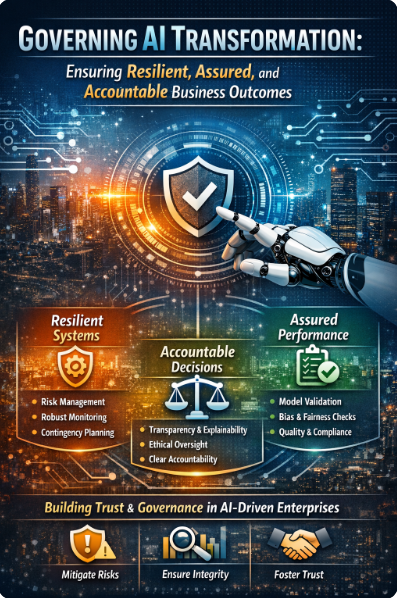
Therefore, organizations implementing the NIST CSF must establish governance mechanisms that ensure outcomes are resilient, assured, and accountable. Governance provides the structures, policies, and oversight necessary to responsibly manage cybersecurity programs while enabling organizations to operate securely and sustainably in an increasingly digital environment.
The Growing Complexity of NIST CSF–Enabled Enterprises
Enterprises adopting the NIST Cybersecurity Framework operate within complex digital ecosystems that span networks, cloud platforms, applications, operational technologies, and third-party supply chains. NIST CSF helps organizations structure cybersecurity programs around critical functions, including identifying risks, protecting assets, detecting threats, responding to incidents, and recovering from disruptions.
As NIST CSF becomes embedded within enterprise governance structures—such as enterprise risk management programs, digital transformation initiatives, and operational security practices, the potential impact of cybersecurity failures becomes more significant.
This complexity makes it difficult for organizations to maintain visibility into how cybersecurity practices influence operational performance and risk exposure. Security activities often span multiple departments, service providers, and digital infrastructures, making coordination and oversight difficult.
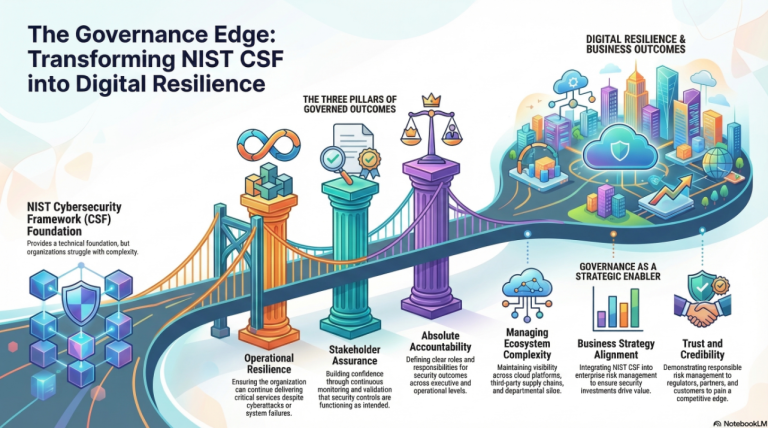
Governance is therefore essential to manage this complexity. Effective governance ensures that organizations maintain visibility into how cybersecurity capabilities operate, how risks are identified and mitigated, and how security controls are implemented across the enterprise. By establishing clear policies, roles, and accountability structures, governance enables enterprises to leverage the NIST CSF while maintaining operational control and transparency.
Ensuring Operational Resilience in NIST CSF–Driven Organizations
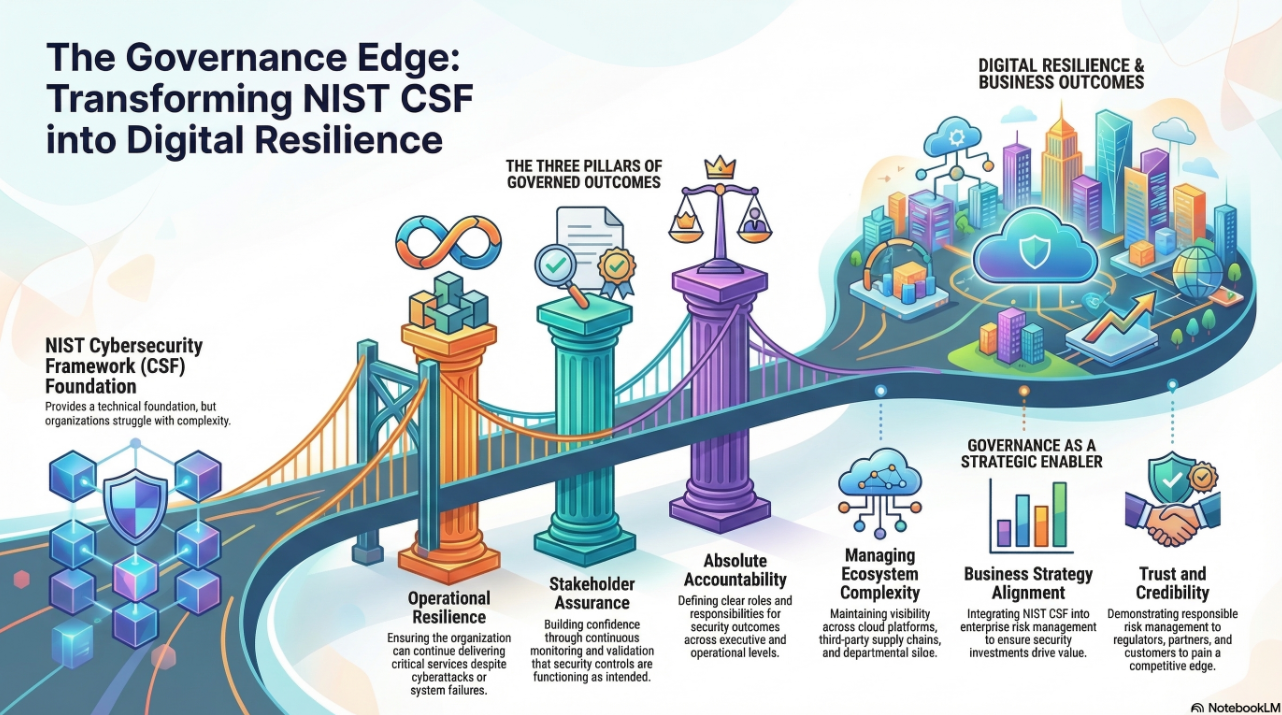
Operational resilience refers to an organization’s ability to continue delivering critical services despite disruptions, failures, or unexpected events. As enterprises increasingly depend on cybersecurity frameworks to manage digital risks, resilience becomes a critical governance concern.
Organizations may experience disruptions due to cyberattacks, ransomware incidents, infrastructure failures, insider threats, or vulnerabilities in digital supply chains. When cybersecurity failures affect essential systems—such as financial platforms, healthcare systems, logistics networks, or critical infrastructure—the consequences can be severe.
Governance frameworks help organizations design cybersecurity capabilities that support resilient operations. NIST CSF provides a structured approach for identifying risks, implementing protections, detecting threats, responding to incidents, and recovering from disruptions.
Enterprises must implement continuous monitoring, risk assessments, vulnerability management, and incident response capabilities to ensure that cybersecurity protections remain effective over time.
Resilience governance also requires organizations to understand dependencies within their digital ecosystem. Digital operations depend on cloud platforms, vendors, software supply chains, and external services that may introduce vulnerabilities. By governing these dependencies and implementing layered security strategies, enterprises can reduce the risk of systemic disruptions.
Ultimately, resilient governance ensures that NIST CSF–driven cybersecurity programs can withstand unexpected threats while continuing to support reliable business operations.
Assurance: Building Confidence in NIST CSF Outcomes
While resilience focuses on the ability to withstand disruptions, assurance focuses on building confidence that cybersecurity programs are functioning as intended. In organizations implementing the NIST CSF, assurance is critical because cybersecurity failures can compromise sensitive information, disrupt services, and damage organizational credibility.
Stakeholders, including executives, regulators, customers, investors, and partners, must have confidence that cybersecurity protections operate effectively and that digital services remain secure.
Assurance involves validating that cybersecurity controls operate within defined parameters and protect critical assets against evolving threats. This requires robust monitoring, testing, auditing, and evaluation of cybersecurity practices.
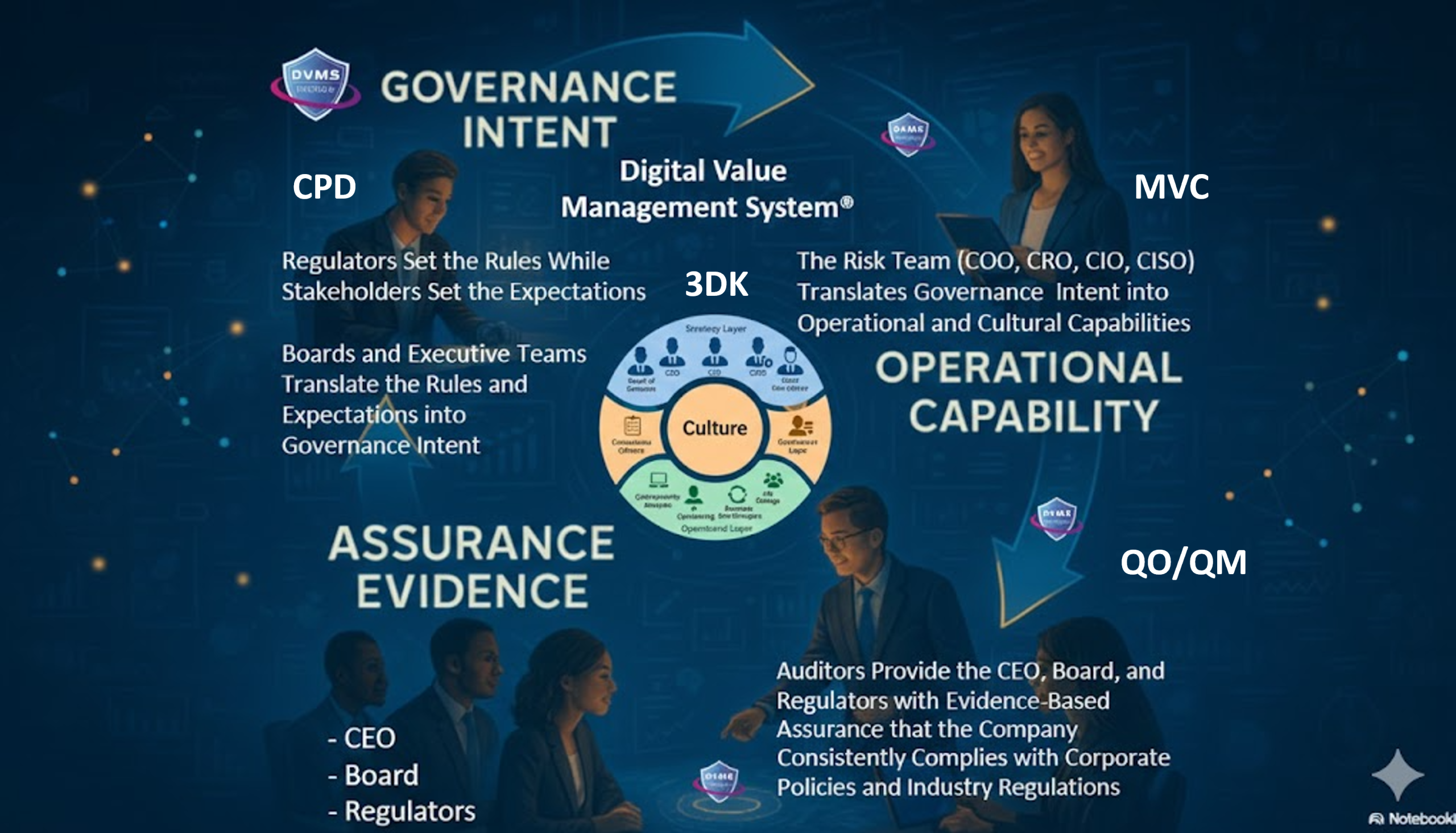
Governance plays a central role in establishing assurance mechanisms. Clear policies and standards must define how cybersecurity capabilities are designed, deployed, and maintained. Independent oversight functions, such as internal audit, compliance teams, and risk management departments, should evaluate cybersecurity programs against defined criteria for effectiveness and regulatory compliance.
Assurance also involves documentation and traceability. Enterprises must maintain records of risk assessments, security control implementations, incident response activities, and cybersecurity performance metrics. This transparency enables organizations to demonstrate adherence to cybersecurity standards while strengthening stakeholder trust.
Accountability in Cybersecurity Governance Decisions
One of the most important challenges in NIST CSF–driven organizations is establishing accountability for cybersecurity outcomes. Cybersecurity frameworks influence decisions that affect operational continuity, data protection, regulatory compliance, and stakeholder confidence.
For example, security governance structures determine how vulnerabilities are prioritized, how risks are mitigated, and how incidents are handled. When these processes span multiple teams and systems, it may become difficult to determine who is responsible for specific outcomes.
Governance frameworks address this challenge by clearly defining roles and responsibilities related to cybersecurity oversight. Organizations must establish accountability for cybersecurity outcomes across multiple levels, including executive leadership, security teams, risk management functions, and operational leaders.
Senior leadership must ensure that cybersecurity initiatives align with organizational strategy, risk management priorities, and regulatory obligations. Accountability also requires transparency in governance processes so that stakeholders understand how cybersecurity decisions are made and how risks are managed.
Furthermore, governance structures must establish escalation processes for addressing cybersecurity incidents, vulnerabilities, or compliance gaps. When security failures occur, organizations must have clear mechanisms for investigation, remediation, and corrective action.
Governance as a Strategic Enabler for NIST CSF Transformation
Some organizations mistakenly view cybersecurity frameworks as constraints that slow innovation. Governance is a strategic enabler for organizations implementing the NIST Cybersecurity Framework.
By establishing clear rules, accountability structures, and assurance mechanisms, governance enables organizations to scale cybersecurity programs effectively while maintaining operational discipline.
Enterprises that lack strong cybersecurity governance often struggle with fragmented security practices, inconsistent risk management activities, and limited visibility into emerging threats. Conversely, organizations with mature governance frameworks can confidently operate within digital ecosystems because they have mechanisms in place to identify risks, enforce security policies, and ensure reliable outcomes.
Governance also supports alignment between cybersecurity initiatives and organizational objectives. Cybersecurity investments should not exist solely as technical safeguards but as integrated components of enterprise risk management and digital strategy.
Additionally, effective governance fosters stakeholder trust. Customers, regulators, partners, and investors are more likely to engage with organizations that demonstrate strong cybersecurity governance and responsible risk management practices.
Integrating NIST CSF Governance with Enterprise Frameworks
To effectively govern cybersecurity transformation, enterprises should integrate NIST CSF governance into broader enterprise governance structures. This includes aligning cybersecurity activities with enterprise risk management programs, compliance initiatives, digital governance frameworks, and operational oversight structures.
Frameworks such as enterprise architecture governance, cybersecurity standards, and digital value management approaches provide structured mechanisms for overseeing digital capabilities.
Integrated governance ensures that NIST CSF initiatives operate within the broader context of enterprise performance, resilience, and risk management. It allows organizations to monitor cybersecurity risks across the enterprise while maintaining consistent oversight and coordination across departments.
By embedding NIST CSF governance within enterprise frameworks, organizations can establish a unified approach to managing cybersecurity risks and digital operations.
Conclusion: Governing NIST CSF for Sustainable Digital Value
The NIST Cybersecurity Framework has become a foundational structure for organizations seeking to manage cybersecurity risks in an increasingly digital world. Effective implementation enables organizations to protect critical assets, maintain operational continuity, and deliver trusted digital services.
However, the growing reliance on cybersecurity frameworks also introduces challenges related to resilience, transparency, and accountability. Organizations that fail to govern cybersecurity effectively may experience cyber incidents, regulatory penalties, and declining stakeholder trust.
Governance provides the foundation for addressing these challenges. By establishing structures that promote resilience, organizations can ensure that cybersecurity programs remain reliable even amid evolving threats. Through assurance, enterprises can build confidence that cybersecurity controls operate as intended and align with regulatory expectations. By enforcing accountability, organizations ensure that responsibility for cybersecurity outcomes remains clearly defined.
Ultimately, organizations that integrate governance into their NIST CSF transformation strategies will be better positioned to protect digital assets, maintain stakeholder trust, and deliver sustainable value in an increasingly interconnected digital environment.
About the Author

Rick Lemieux
Co-Founder and Chief Product Officer of the DVMS Institute
Rick has 40+ years of passion and experience creating solutions to give organizations a competitive edge in their service markets. In 2015, Rick was identified as one of the top five IT Entrepreneurs in the State of Rhode Island by the TECH 10 awards for developing innovative training and mentoring solutions for boards, senior executives, and operational stakeholders.
Digital Value Management System® is a registered trademark of the DVMS Institute LLC.
® DVMS Institute 2026 All Rights Reserved