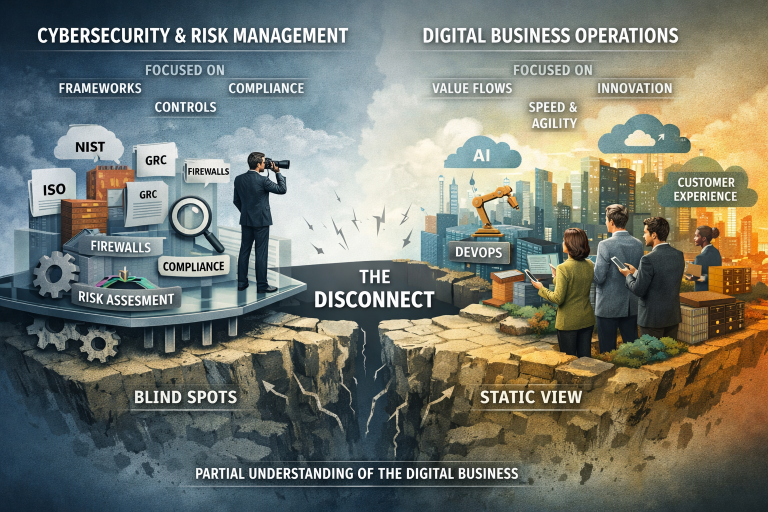
Why Cybersecurity and Risk Management Professionals Often Do Not Truly Understand Their Digital Business
Rick Lemieux – Co-Founder and Chief Product Officer of the DVMS Institute
Modern organizations invest heavily in cybersecurity and risk management. They adopt recognized frameworks, hire credentialed professionals, deploy sophisticated tools, and comply with regulatory requirements. Yet, despite these efforts, catastrophic digital failures continue to occur—often in organizations that appear, on paper, to be well-governed and well-protected. This persistent disconnect suggests a deeper issue: many cybersecurity and risk management professionals do not truly understand the digital businesses they are meant to protect.
This lack of understanding is not due to incompetence or negligence. Instead, it is a structural and conceptual problem rooted in how cybersecurity and risk management have evolved as disciplines—separate from how digital value is created, delivered, and sustained.
A Control-Centric View Detached from Business Reality
Cybersecurity and risk management functions are typically organized around controls, compliance, and technical assets. Professionals are trained to identify threats, vulnerabilities, and control gaps; assess risks; and ensure alignment with standards such as the NIST CSF, ISO 27001, or regulatory mandates. While these activities are necessary, they are rarely sufficient to capture the true nature of a digital business’s operations.
Digital businesses are not collections of isolated systems. They are dynamic networks of products, services, data flows, partners, customers, and automated decision-making processes. Value is created through interactions across organizational, technological, and ecosystem boundaries. When cybersecurity professionals focus primarily on systems, controls, and compliance artifacts, they often lose sight of how those elements contribute—or fail to contribute—to business outcomes.
As a result, security is managed as an overlay of technical safeguards rather than as an intrinsic property of how value is designed, delivered, and governed.
Functional Silos Fragment Understanding
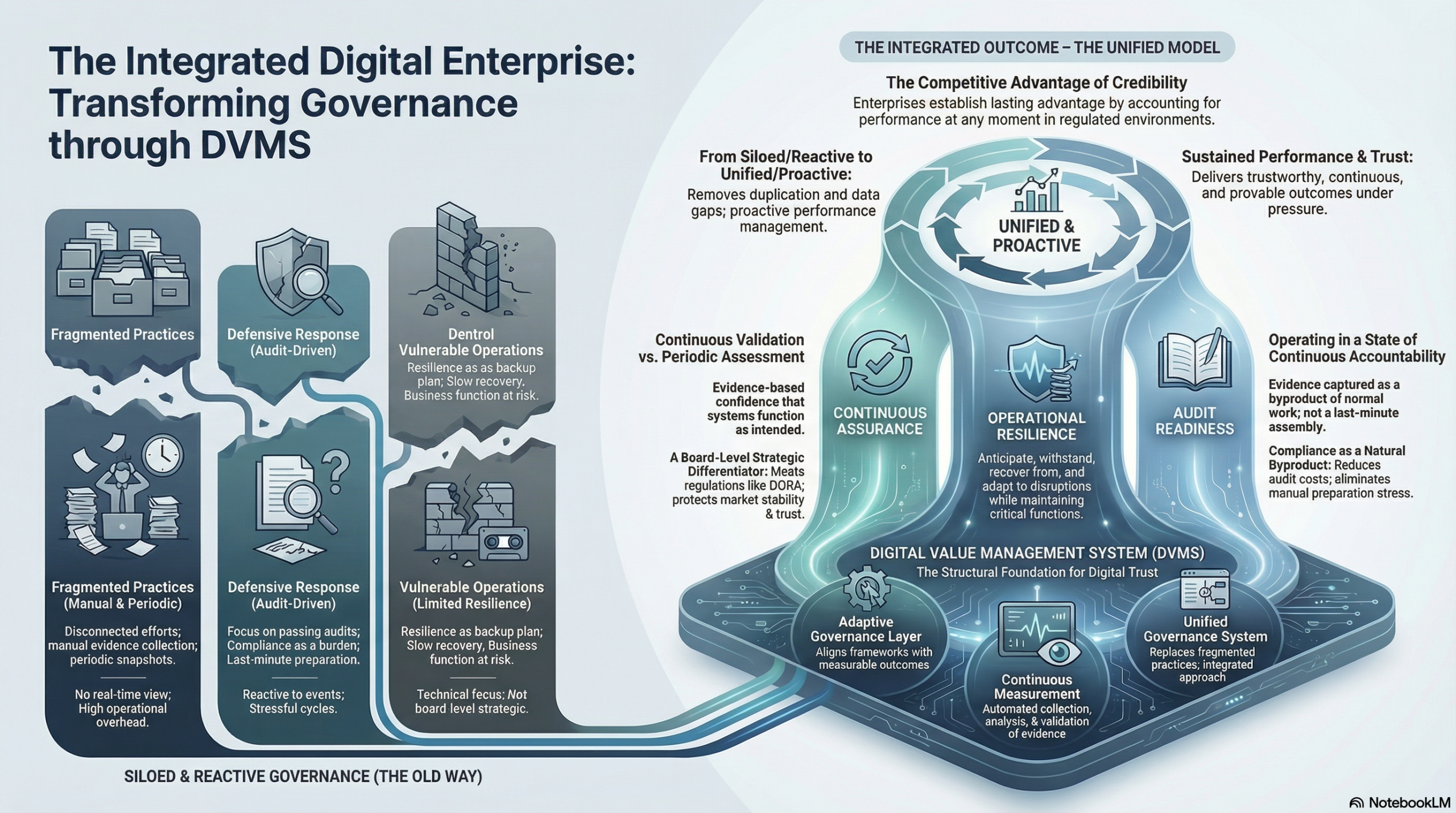
Another reason cybersecurity and risk professionals struggle to understand the digital business is organizational fragmentation. Cybersecurity, risk management, IT operations, software development, compliance, and business leadership typically operate in separate silos, each with its own language, incentives, and success metrics.
Security teams focus on threat mitigation. Risk teams focus on registers and assessments. IT focuses on availability and performance. Development teams prioritize speed and innovation. Business leaders focus on growth, customer experience, and revenue. Rarely is there a shared model that explains how these perspectives fit together to sustain digital value under normal and stressed conditions.
Without an integrated view, cybersecurity professionals see only a slice of the business. They may understand networks and applications in technical terms, but not how those systems enable specific value propositions, revenue streams, or regulatory obligations. When failures occur—such as breaches, outages, or systemic risk events—they often emerge at the boundaries between silos, where responsibility and visibility are weakest.
Risk Is Abstracted Away from Value
Risk management frameworks commonly emphasize abstract risk statements, likelihoods, and impacts. While helpful in reporting, these abstractions can obscure the fundamental mechanisms by which digital value is compromised. Risk becomes something to be documented and rated, rather than something to be actively managed within operational processes.
This abstraction encourages a false sense of control. Organizations may believe they “understand their risks” because they have comprehensive risk registers and dashboards, even though they lack a concrete understanding of how digital services behave under stress, how dependencies cascade, or how decisions are made in real time.
Proper understanding of a digital business requires tracing risk to specific value flows: how data moves, how decisions are automated, how services depend on third parties, and how failures propagate. Many cybersecurity and risk professionals are not equipped—or organizationally empowered—to perform this kind of analysis.
Frameworks Are Adopted, Not Integrated
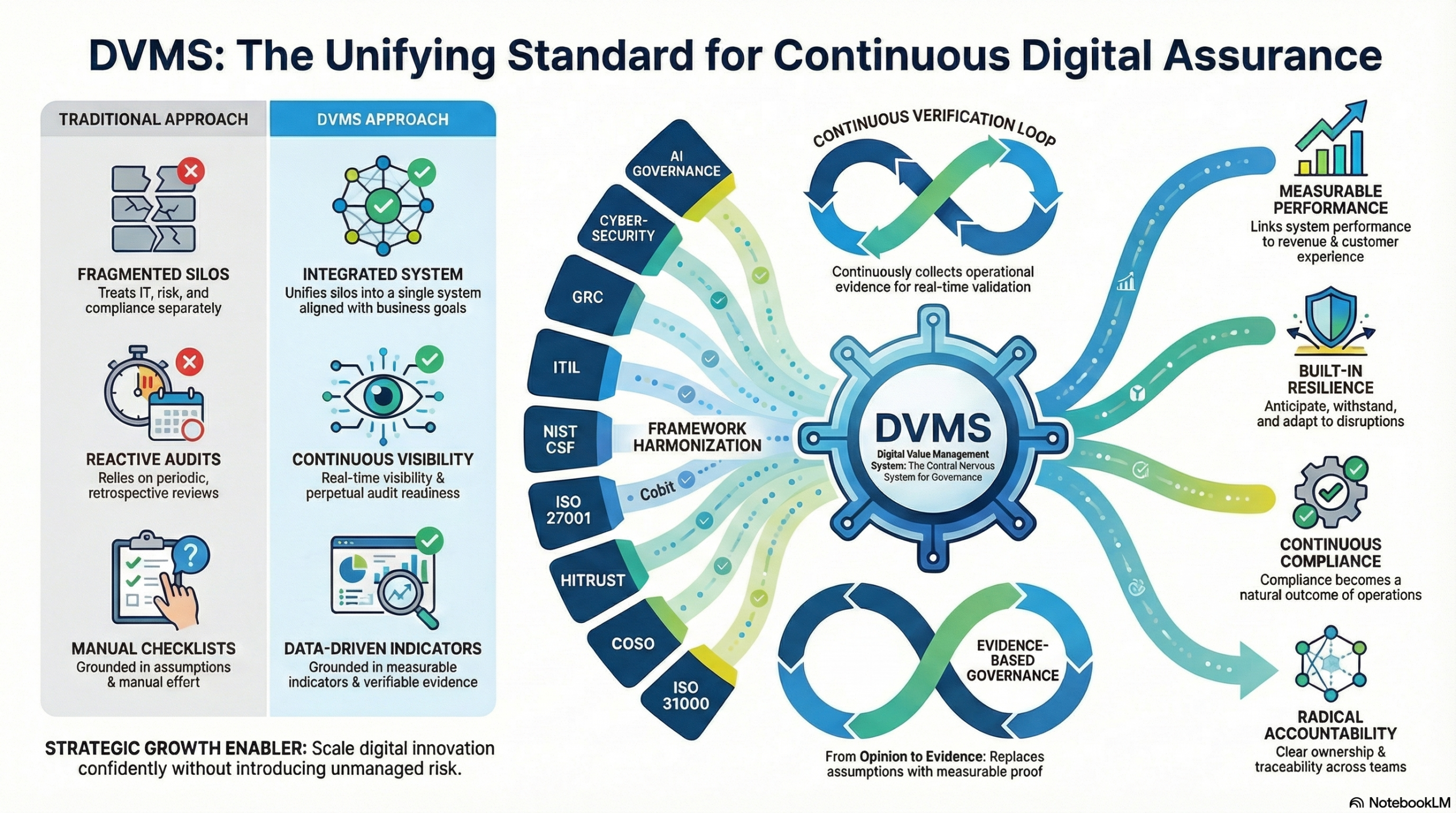
Most organizations adopt multiple frameworks: cybersecurity frameworks, risk frameworks, IT service management models, development methodologies, and compliance standards. These frameworks are often implemented independently, each addressing a narrow concern. While individually sound, together they form a fragmented governance landscape.
Cybersecurity professionals may be fluent in one or more frameworks, but fluency does not equate to integration. Frameworks describe what should exist, not how digital value functions across the enterprise. When frameworks are treated as checklists rather than as components of a coherent system, professionals end up managing compliance artifacts rather than addressing business realities.
This creates a dangerous illusion: the organization appears mature and well governed, while its underlying digital operations remain poorly understood and weakly coordinated.
Technology Has Outpaced Governance Models
Digital businesses increasingly rely on cloud services, APIs, automation, AI, and complex supply chains. These technologies introduce speed, scale, and non-linearity that traditional governance and risk models were never designed to handle. Decisions are automated, systems adapt dynamically, and failures can propagate faster than human oversight.
Many cybersecurity and risk professionals were trained in an era of relatively static systems and linear processes. Applying those mental models to modern digital ecosystems leads to blind spots. The business evolves faster than the governance structures meant to oversee it, leaving professionals managing yesterday’s risks while tomorrow’s failures accumulate unnoticed.
Understanding Requires a Shift in Perspective
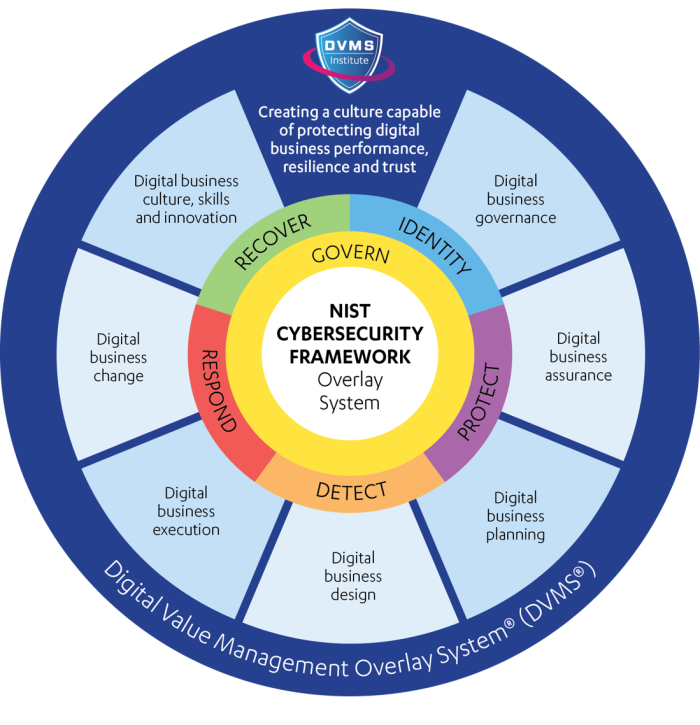
To truly understand a digital business, cybersecurity and risk management professionals must shift from a control-centric, siloed mindset to a value-centric, systems-based perspective. This means understanding not just assets and threats, but how value is intentionally designed, operationalized, measured, and protected across its entire lifecycle.
It requires seeing cybersecurity not as a defensive function, but as a contributor to digital trust, resilience, and performance. It requires integrating risk management into how decisions are made, services are designed, and outcomes are governed—rather than treating risk as an after-the-fact assessment.
Until this shift occurs, organizations will continue to experience failures not because they lack frameworks or expertise, but because those frameworks and experts do not reflect how the digital business truly works.
Conclusion
Cybersecurity and risk management professionals are highly skilled within their domains, yet often constrained by outdated models, fragmented structures, and abstracted views of risk. In a world where digital value is complex, dynamic, and deeply interconnected, partial understanding is no longer sufficient.
True digital resilience depends on understanding the business as a living system—one where value, risk, security, and performance are inseparable. Until cybersecurity and risk management evolve to reflect this reality, organizations will remain vulnerable at the very boundaries where their digital value is created.
About the Author

Rick Lemieux
Co-Founder and Chief Product Officer of the DVMS Institute
Rick has 40+ years of passion and experience creating solutions to give organizations a competitive edge in their service markets. In 2015, Rick was identified as one of the top five IT Entrepreneurs in the State of Rhode Island by the TECH 10 awards for developing innovative training and mentoring solutions for boards, senior executives, and operational stakeholders.
Digital Value Management System® is a registered trademark of the DVMS Institute LLC.
® DVMS Institute 2026 All Rights Reserved