Culture as Capability – Embedding Resilience into Daily Behavior – The Assurance in Action Series – Part 4
David Nichols – Co-Founder and Executive Director of the DVMS Institute
The Cultural Challenge
Resilience isn’t based solely on frameworks, policies, or controls. Instead, it is demonstrated through daily actions. Culture influences whether staff escalate a critical vulnerability, if managers admit when recovery thresholds are missed, and whether executives confront uncomfortable truths.
This is the paradox at the heart of resilience: organizations often have the right systems and frameworks in place, yet they still fail when culture resists transparency, collaboration, or accountability. History is full of examples where culture, not technology, undermined resilience. In some organizations, frontline teams detected issues but hesitated to escalate out of fear of reprisal. In others, managers prioritized keeping dashboards green over admitting to gaps. The result was not just delayed responses but full-blown crises.
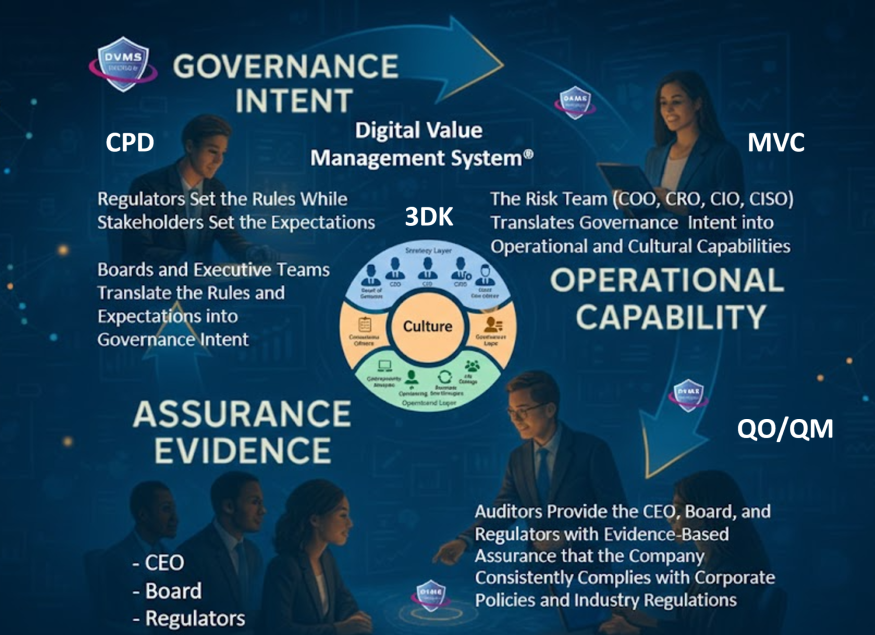
Boards and executives may declare intent, managers may adopt the Digital Value Management System® (DVMS), and controls may be implemented. Still, without a culture that fosters openness, accountability, and trust, evidence of assurance becomes meaningless.
This reality means that culture cannot be treated as an afterthought. It must be designed and managed with the same rigor as incident response, vendor continuity, or cyber defense.
Culture as a Capability, Not an Afterthought
Too often, culture is seen as intangible, something to “influence” rather than actively implement. Leaders discuss the “tone at the top” or refer to employee engagement surveys, but these ideas often remain vague. In the DVMS, culture is understood in a different way.
Culture is an organizational capability. Like other capabilities, it can be designed, measured, and improved. It is part of the Minimum Viable Capabilities (MVC) because no system of governance, workflows, or evidence can sustain itself if the underlying culture does not promote candor, discipline, and cross-functional collaboration.
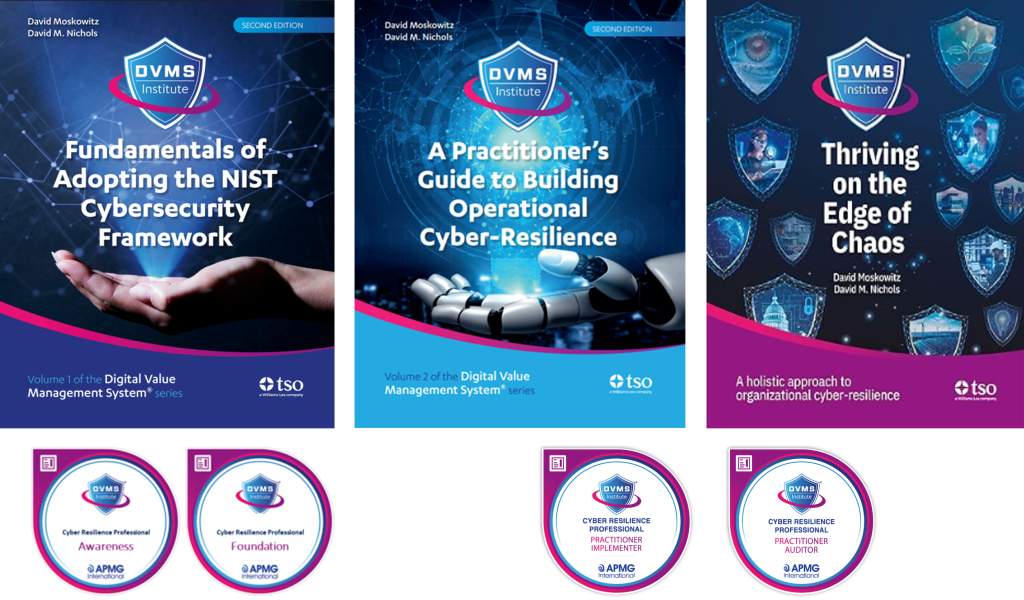
This perspective aligns with Thriving on the Edge of Chaos: Managing at the Intersection of Value and Risk in the Digital Era, which emphasizes that leadership is deeply intertwined with culture. Leaders’ actions influence the system. When leaders act defensively, employees tend to hide problems. Conversely, when leaders encourage transparency, issues are identified and addressed early. Therefore, managers must see culture not merely as an HR issue but as a systemic skill crucial for resilience.
CPD and Cultural Alignment
The Create, Protect, Deliver (CPD) Model emphasizes placing culture at the heart of business value. A culture aligned with CPD ensures resilience extends beyond technical functions, influencing every decision and interaction.
- Create: Culture fosters innovation in resilience practices. Employees feel empowered to suggest improvements or test new approaches without waiting for a compliance mandate.
- Protect: Culture encourages discipline and transparency. Escalation is swift, rehearsals are candid, and errors are treated as opportunities to learn rather than failures to be punished.
- Deliver: Culture reinforces collaboration under pressure. Teams rally across silos to maintain continuity, protect customer trust, and ensure delivery of value even when systems are under attack.
When culture aligns with CPD, resilience stops being a compliance exercise and becomes a lived behavior. People no longer act out of fear of failing an audit but from confidence in their ability to uphold business value.
Evidence of Culture
Boards do not want generic assurances that “we have the right culture.” They want proof. Just as technical controls must be tested, cultural claims must be demonstrated in measurable ways.
Escalation speed is one example. How long does it take for an incident to move from detection to executive awareness? A resilient culture reduces this time because people are not afraid to raise their hands. Participation in rehearsals is another factor. Do cross-functional teams engage meaningfully, or do they attend reluctantly, viewing the exercise as just a compliance obligation? Near-miss reporting is equally revealing. Are small failures logged and addressed, or are they buried until they escalate into crises?
The Practitioner’s Guide to Building Cyber-Resilience (Second Edition) presents the QO–QM (Question Outcome–Question Metric) model as a way to connect governance outcomes with operational measures. When applied to culture, the board might say: “Staff must feel safe reporting issues.” Managers then monitor increases in near-miss reports, improvements in corrective action rates, or participation in voluntary resilience exercises. This approach makes the abstract idea of culture into measurable outcomes and metrics that can be assessed, reported, and improved.
The Consequences of Weak Culture
Consider recent breaches where culture played as significant a role as technology.
- At Equifax (2017), the vulnerability was known and the patch was available. Yet organizational silos and a culture of minimal accountability delayed remediation. The result was a catastrophic loss of consumer trust.
- At Colonial Pipeline (2021), cyber remained treated as “IT’s problem.” Governance did not integrate cyber risk into operational resilience. A culture of compartmentalization left executives unprepared to manage a ransomware event that escalated into a national crisis.
- In the 2023 MOVEit breach, vendor risk, IT operations, and cyber monitoring each believed they were fulfilling their duties. But the culture of siloed accountability prevented unified oversight, allowing the exploit to cascade across industries.
In each case, culture was the unseen weakness. Capabilities existed on paper, but cultural blind spots rendered frameworks ineffective, turning them into illusions of resilience.
The Manager’s Role in Shaping Culture
Culture isn’t dictated solely from the boardroom. It is shaped daily by managers’ decisions and actions. A single choice by a manager, such as rewarding early reporting, insisting on candid after-action reviews, or integrating functions during rehearsals, creates a ripple effect throughout the system.
Managers exemplify what resilience looks like. A manager who praises a team for identifying an issue early shows vigilance. A manager who views a failed exercise as an opportunity to learn rather than a performance critique demonstrates psychological safety. A manager who requires involving operations, IT, and cyber in the same resilience drill promotes integration.
As Thriving on the Edge of Chaos notes, leadership is the art of turning complexity into clarity. Managers demonstrate leadership when they help their teams see resilience not as abstract governance jargon but as daily behavior that sustains value.
The Executive Imperative
For boards, culture shouldn’t be seen as just an HR issue or background factor. It is a matter of assurance. Weak cultures represent governance failures because they hinder the surfacing, sharing, and actioning of evidence. Conversely, strong cultures enhance assurance by making sure that every rehearsal, incident, and near miss contributes to organizational learning.
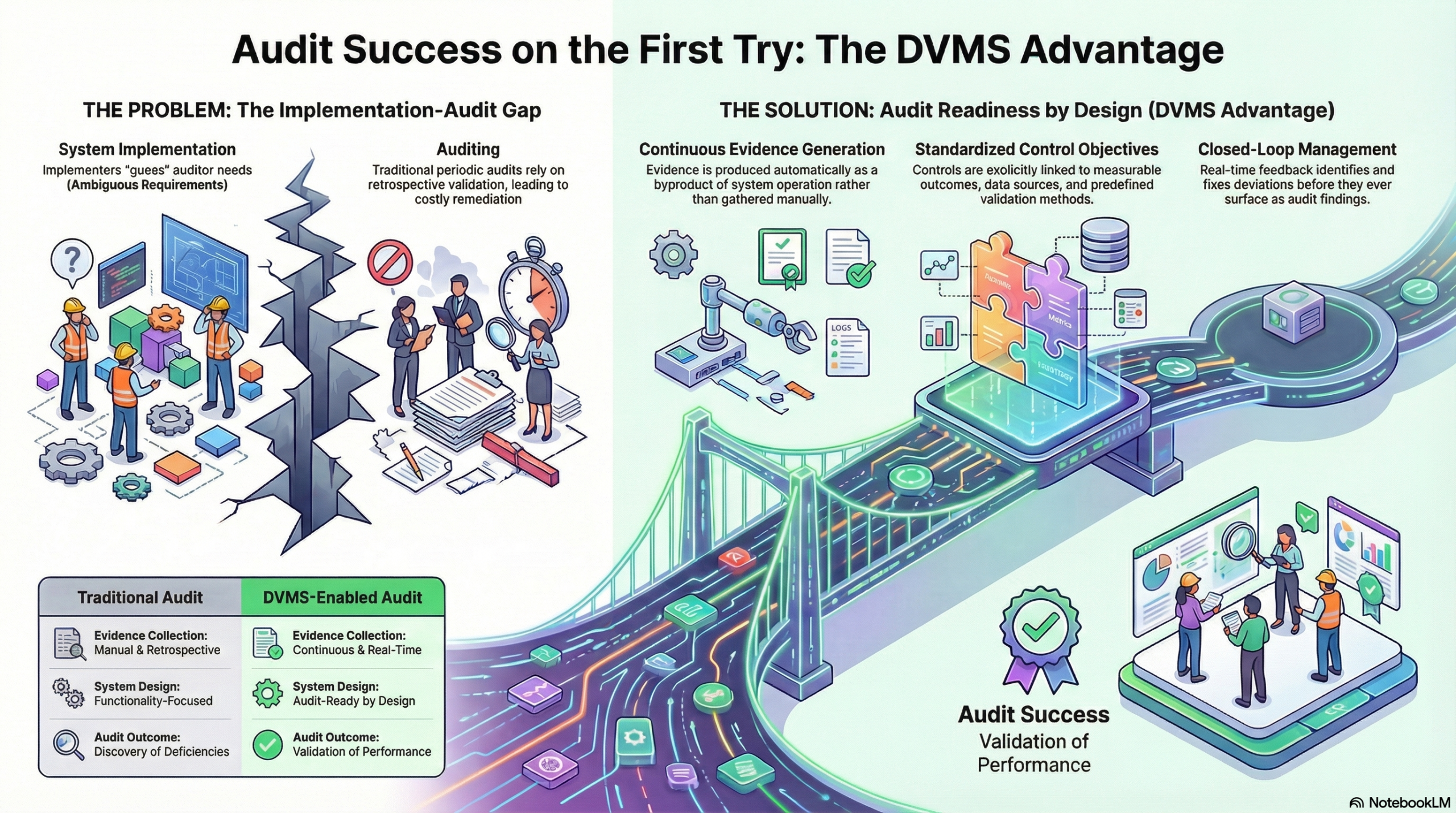
Directors should evaluate culture with the exact “fit for purpose” and “fit for use” tests they apply to technical capabilities. While transparency and accountability may be highlighted as strategic priorities, the actual question is whether evidence shows them in action. Boards must demand not just policies but evidence: proof that escalation occurs swiftly, that near misses are logged, that cross-functional drills are genuine, and that employees feel safe speaking openly without fear of punishment.
The Role of AI and Automation in Supporting Culture
Historically, managers saw assurance as burdensome. Gathering, testing, and reporting cultural indicators in real time seemed impractical. Psychological safety surveys, rehearsal participation metrics, or near-miss logs required slow manual processes that quickly lagged behind actual conditions.
That is changing. Advances in automation and artificial intelligence are making assurance possible at scale. Automated monitoring provides real-time visibility not only into systems but also into participation rates and escalation behaviors. AI-driven simulations continuously test resilience scenarios, offering evidence of cultural responsiveness under pressure. Agentic systems record performance data directly into governance dashboards, reducing the gap between daily behavior and board-level oversight.
For managers, AI is not a substitute for judgment or leadership. It is a tool that reduces the burden of assurance, allowing them to concentrate on interpretation, decision-making, and ongoing improvement. What was once endless paperwork now becomes real-time confidence, driven by systems that gather evidence without creating overwhelming overhead.
The Manager’s Paradigm Shift
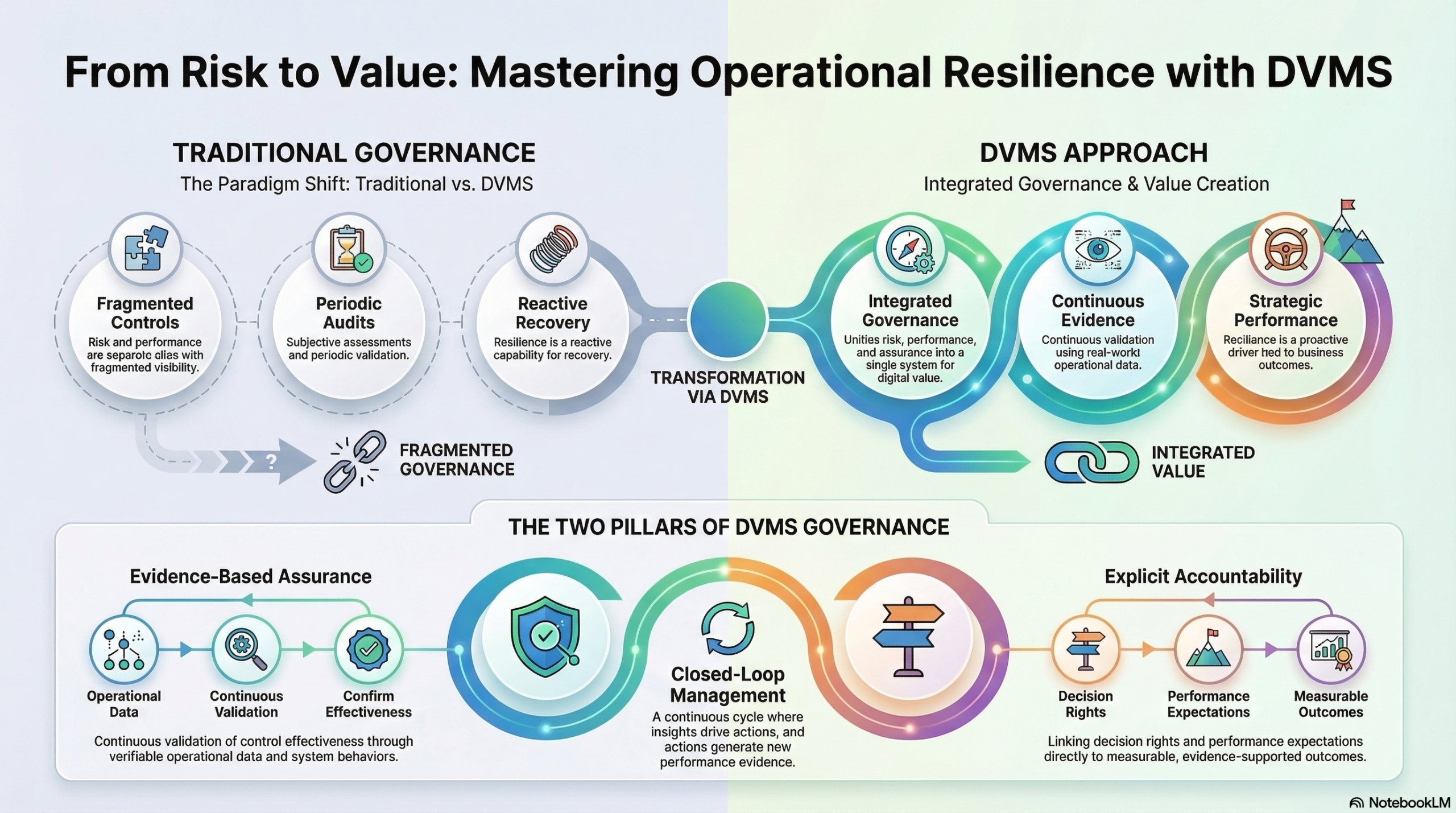
All of this indicates a broader change for managers. Previously, governance and resilience were viewed as transactions. The focus was on implementing controls, generating reports, and passing audits. Activity was seen as progress.
Today, disruption is ongoing, and boards are no longer content with just artifacts of compliance. They demand assurance, evidence that capabilities can perform under pressure. This pushes managers to transition from delivering documentation to developing capabilities, from showing activity to demonstrating performance, and from feeling comfortable to having confidence.
This shift requires managers to think systemically. The CPD Model links culture to value creation, protection, and delivery. The MVC overlay helps managers identify cultural gaps and incorporate them into capabilities. The QO–QM model ties intent to evidence, ensuring cultural goals are measured and improved.
Because the scale of this shift can feel overwhelming, the DVMS FastTrack® approach offers a phased pathway. Managers begin with critical MVCs, develop integrated cultural skills around them, and demonstrate resilience over time. Each step boosts confidence, reduces complexity, and encourages cultural change without overwhelming the organization.
From Comfort to Confidence
Boards no longer settle for just knowing which controls exist. They seek proof that these controls function effectively under pressure. For managers, the key question is this: Are you providing artifacts that record activity or assurance evidence that proves capability?
The Assurance Mandate whitepaper introduced the shift from Governance, Risk, and Compliance (GRC) to Governance, Resilience, and Assurance (GRA). Parts 1 and 2 of this series demonstrated how intent must be translated into capabilities and how frameworks like the NIST Cybersecurity Framework can be implemented through DVMS. Part 3 explained how controls must generate evidence.
Part 4 ties it all together: nothing works without culture. Culture determines whether resilience is merely a slogan or a genuine skill. The first offers comfort. The second fosters confidence.
Looking Ahead
In the following article of the Assurance in Action Series, we will explore the concept of continual improvement. Assurance is not a static goal but an ongoing cycle of learning, testing, and adapting. Managers will see how the DVMS enables continual improvement cycles operationalized by the CPD model and realized in the MVC.
About the Author

Dave is the Executive Director of the DVMS Institute.
Dave spent his “formative years” on US Navy submarines. There, he learned complex systems, functioning in high-performance teams, and what it takes to be an exceptional leader. He took those skills into civilian life and built a successful career leading high-performance teams in software development and information service delivery.
Digital Value Management System® is a registered trademark of the DVMS Institute LLC.
® DVMS Institute 2026 All Rights Reserved