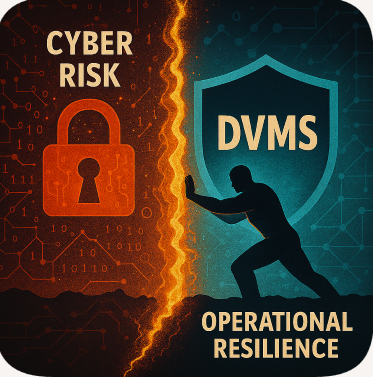
How a Digital Value Management System® Transforms Cyber Risk into Operational Resilience
Rick Lemieux – Co-Founder and Chief Product Officer of the DVMS Institute
Introduction: From Risk to Resilience
In today’s digital economy, every organization depends on technology to deliver products and services, connect with stakeholders, and comply with regulatory requirements.
Yet with this dependence comes a growing vulnerability: cyber risk. Breaches, ransomware, insider threats, and supply chain compromises no longer represent isolated technical problems — they are existential business risks that can disrupt operations, erode trust, and trigger regulatory penalties.
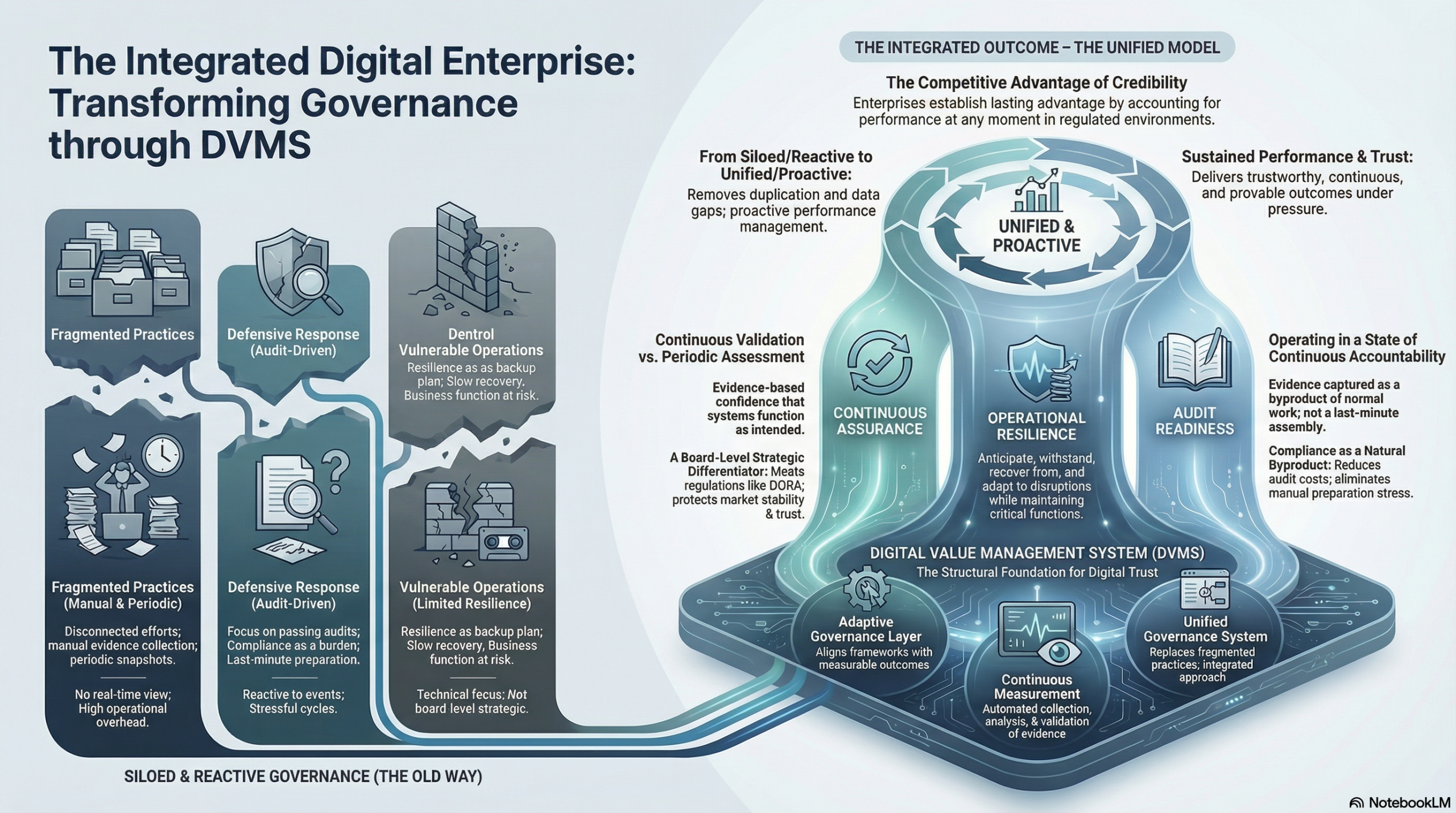
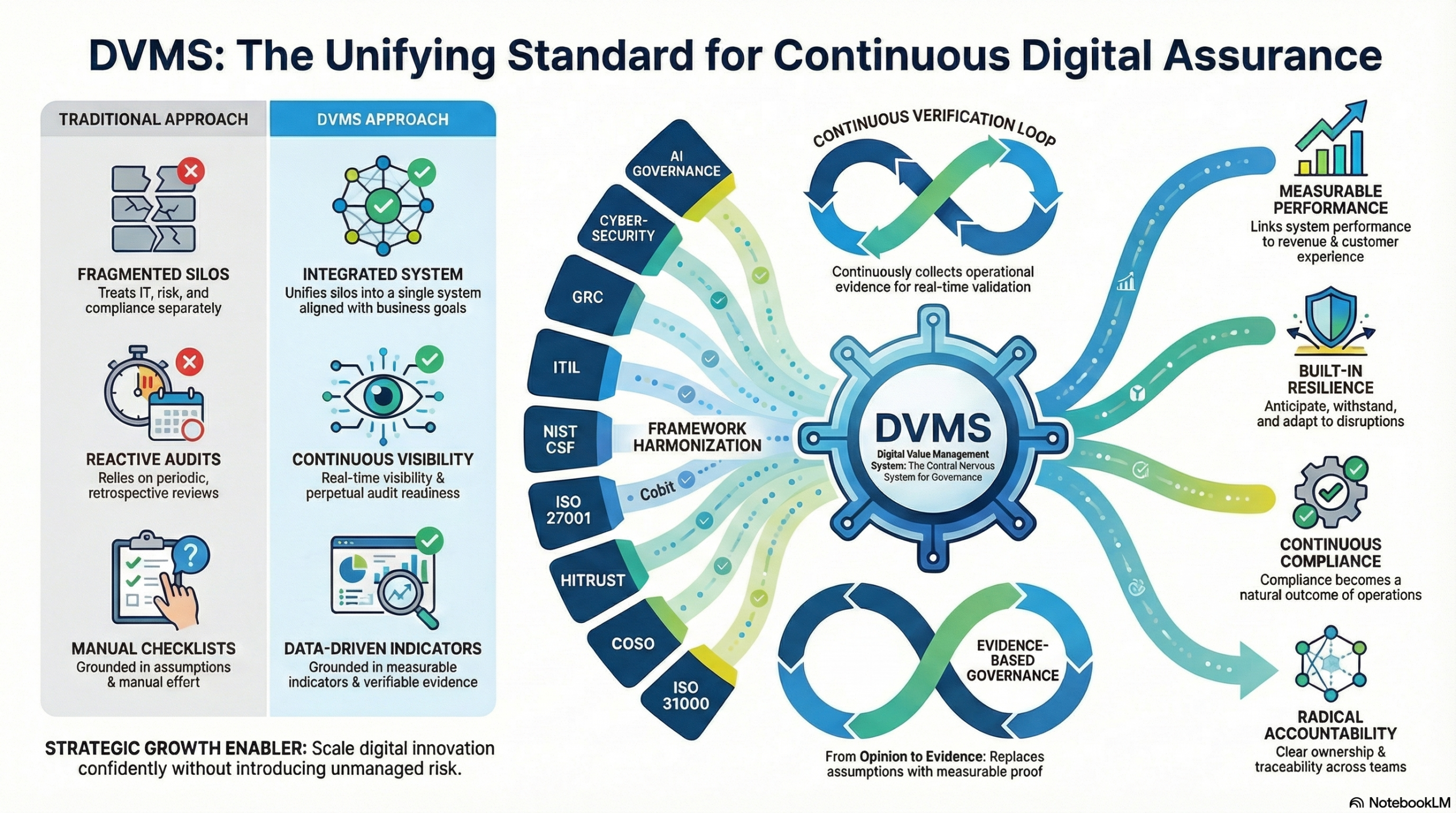
Traditional approaches to managing risk often treat cybersecurity as a siloed IT function, disconnected from service management and governance processes. This fragmentation leaves organizations exposed. The Digital Value Management System® (DVMS) offers a different path. By overlaying and integrating existing IT service management (ITSM), governance, risk, compliance (GRC), and cybersecurity programs, the DVMS transforms cyber risk into a foundation for operational resilience.
Cyber Risk as a Strategic Challenge
Cyber risk has evolved far beyond technical exploits. Every digital asset — customer data, payment systems, and supply chain platforms — represents value and vulnerability. If it has value to stakeholders, it has value to attackers. The expanding attack surface, coupled with increasingly sophisticated adversaries, means that prevention alone is insufficient. Organizations must accept that breaches are inevitable and focus on resilience: the ability to withstand, adapt, and recover from disruptions. Operational resilience reframes cybersecurity from a reactive technical problem into a proactive business capability. However, achieving this requires alignment across ITSM, GRC, and cybersecurity — something most organizations lack. The DVMS provides the structure to close these gaps.
The DVMS Overlay: Uniting Fragmented Systems
The DVMS is not another framework to implement or a new method to adopt. It is an overlay system designed to work with what organizations already have. ITSM processes manage service delivery and performance, GRC ensures compliance and risk oversight, and cybersecurity protects digital assets. On their own, these functions are often practical within their silos but lack coordination. The DVMS provides a unifying overlay that exposes gaps, eliminates redundancies, and aligns outcomes to enterprise goals. By connecting value creation (ITSM), value protection (cybersecurity), and value assurance (GRC), the DVMS ensures that cyber risk is managed as an intrinsic part of daily operations. This transformation turns scattered risk management efforts into a cohesive system of resilience.
Systems Thinking: Seeing the Whole, Not the Parts
A cornerstone of the DVMS is systems thinking. Cyber risk cannot be managed effectively if viewed only through technology. The DVMS encourages organizations to see themselves as complex adaptive systems, where people, processes, and technology interact dynamically. A weakness in one area inevitably affects the others. By applying systems thinking, leaders can recognize interdependencies, anticipate cascading failures, and design controls that strengthen resilience across the enterprise. This holistic view shifts the conversation from isolated risk controls to enterprise-wide risk governance, making resilience a shared responsibility across ITSM, GRC, and cybersecurity teams.
Linking to the NIST Cybersecurity Framework 2.0
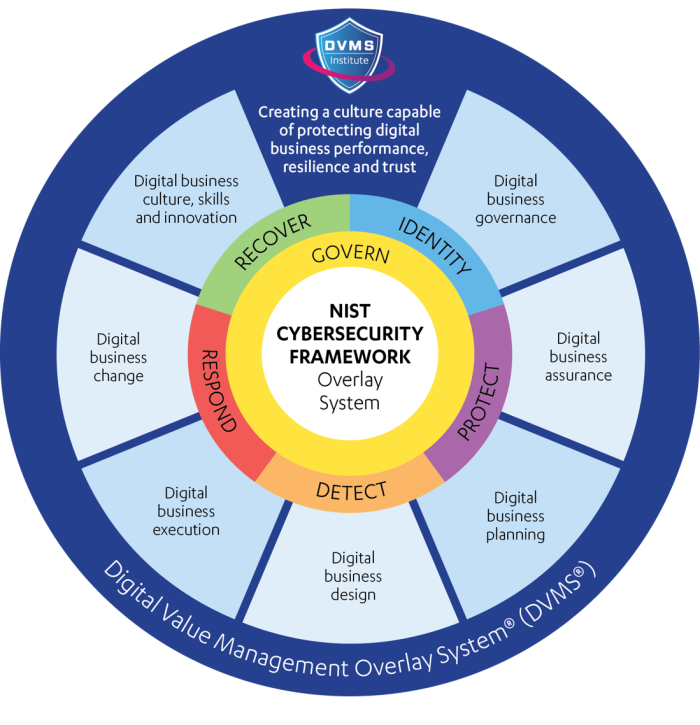
The DVMS aligns closely with the NIST Cybersecurity Framework (CSF) 2.0, which emphasizes governance, outcomes, and enterprise risk management. While the CSF describes good cybersecurity outcomes, it does not prescribe how to achieve them. The DVMS provides the “how” by operationalizing CSF outcomes across ITSM, GRC, and cybersecurity. For example, the CSF’s Govern function finds practical expression in the DVMS Govern and Assure capabilities, while its Protect and Respond functions align with Execute and Change. By linking directly to the CSF, the DVMS ensures compliance with industry best practices while extending them into an integrated resilience system.
Culture as the Catalyst
No system of resilience can succeed without culture. Technology and processes may enable, but people determine whether resilience takes root. The DVMS explicitly integrates culture as a source of risk and an enabler of resilience. By fostering a culture of accountability, learning, and collaboration, organizations ensure that employees at every level see resilience as part of their role. This cultural shift closes the gap between governance intent and operational reality, embedding resilience into daily decision-making. It transforms cyber risk from a hidden liability into an open, managed, and continuously improved capability.
The DVMS CPD Model: Creating, Protecting, and Delivering Value
At the heart of the DVMS is the CPD Model, which integrates strategy, governance, and execution into a single loop of continual adaptation. The CPD Model recognizes that value creation and value protection are inseparable. Unprotected value is no value at all. By embedding protection directly into the design and delivery of digital services, organizations ensure that resilience is not an afterthought but an outcome of normal operations. This model transforms cyber risk into a by-product of delivering appropriately protected value. Rather than treating resilience as a separate program, the CPD Model operationalizes it as part of everyday business.
The DVMS MVC/ZX Model: Minimum Viable Capabilities for Resilience
The DVMS defines seven Minimum Viable Capabilities (MVC): Govern, Assure, Plan, Design, Change, Execute, and Innovate. Each capability represents a critical dimension of resilience:
- Govern sets direction and risk appetite.
- Assure ensures that operations meet governance expectations.
- Plan translates strategy into adaptive roadmaps.
- Design embeds resilience into service and system development.
- Change manages adaptation in response to threats and opportunities.
- Execute delivers services that are both high-performing and protected.
- Innovate drives continual improvement and cultural learning.
Together, these capabilities ensure that cyber risk management is not reactive but adaptive. By aligning ITSM, GRC, and cybersecurity activities under these seven capabilities, the DVMS creates an operational rhythm that sustains resilience over time.
The DVMS 3D Knowledge Model™ : Connecting the Silos
The 3D Knowledge Model plays a pivotal role in how a DVMS transforms cyber risk into operational resilience by ensuring that knowledge is captured, shared, and applied across three critical dimensions: time, perspective, and culture. It integrates lessons from the past, situational awareness in the present, and foresight into the future, enabling organizations to anticipate risks and adapt proactively. It also bridges perspectives across functions—IT, GRC, cybersecurity, and business leadership—so that risk is no longer seen as a siloed technical issue but as a systemic, enterprise-wide concern. Most importantly, it embeds resilience into the organizational culture, making knowledge not just an artifact but a living capability that shapes behaviors, decisions, and governance. By harnessing these dimensions, the 3D Knowledge Model equips organizations to continuously learn, adapt, and evolve, turning cyber risk from a disruptive threat into a catalyst for building enduring operational resilience.
The DVMS QO/QM: Turning Strategy into Measurable Outcomes
The DVMS QO/QM (Question-Outcome/Question-Metric) is the analytical engine within the Digital Value Management System® (DVMS) that enables organizations to operationalize assurance and continual improvement by turning strategy into measurable outcomes. Built as an evolution of the Goal-Question-Metric (GQM) method and GQM+Strategies, the QO/QM system connects organizational strategy-risk—the unified concept that strategy and risk are inseparable—with governance, assurance, and execution activities. It does this by first defining desired outcomes (“O”) that express what resilient, compliant, and trusted digital performance looks like, then developing precise questions (“Q”) and evidence-based metrics (“M”) to validate whether those outcomes are being achieved.
Within the DVMS architecture—composed of the MVC (Govern, Assure, Plan, Design, Change, Execute, Innovate) and the CPD Model (Create, Protect, Deliver)—the QO/QM system functions as a feedback loop that measures performance, cultural alignment, and assurance maturity across all capabilities. It integrates systems thinking, cultural factors, and continuous learning to make both qualitative and quantitative aspects of resilience measurable. In effect, QO/QM transforms the abstract concepts of governance, culture, and assurance into a quantifiable, adaptive quality management system that links policy intent to operational evidence and enables organizations to continually create and protect digital business value in alignment with the NIST Cybersecurity Framework 2.0
The DVMS FastTrack™ Model: Building Resilience in Phases
Transforming risk into resilience is not a one-time project but a journey. The DVMS introduces the FastTrack™ Model, a phased approach that allows organizations to evolve iteratively:
- Initiate (Phase 0): Establish baselines and readiness.
- Basic Hygiene (Phase 1): Stabilize the environment and close obvious gaps.
- Expand (Phase 2): Optimize processes and integrate across silos.
- Innovate (Phase 3): Embed continual improvement and adaptive resilience.
This approach avoids overwhelming organizations with large-scale change while ensuring steady progress. Each phase builds on existing capabilities, gradually converting cyber risk into embedded resilience that strengthens over time.
Business Outcomes: Why DVMS Matters
The transformation of cyber risk into operational resilience through the DVMS delivers tangible business outcomes:
- Resilience: The ability to recover from disruptions with minimal impact.
- Compliance: Demonstrable adherence to regulatory and audit requirements.
- Trust: Increased confidence from customers, partners, and regulators.
- Performance: Enhanced service reliability and efficiency.
- Adaptability: Continuous innovation and learning in the face of evolving threats.
These outcomes matter because they translate directly into competitive advantage. In markets where disruption is inevitable, resilience becomes a differentiator. In industries under heavy regulation, compliance and assurance are non-negotiable. And in a digital economy where trust is currency, organizations that can demonstrate resilience win stakeholder confidence.
Conclusion: Resilience as the New Standard
Cyber risk is not going away. In fact, it will only grow more complex as technology evolves, and adversaries become more resourceful. The organizations that will thrive in this environment are those that stop treating cybersecurity as a technical afterthought and start treating resilience as a strategic imperative. The DVMS provides the blueprint. By overlaying existing ITSM, GRC, and cybersecurity programs, applying systems thinking, embedding resilience into culture, and operationalizing the NIST CSF, the DVMS transforms cyber risk into operational resilience. This transformation is not just about surviving the next attack — it is about building organizations that can adapt, recover, and continue to deliver trusted digital value no matter what challenges arise. In the digital age, resilience is not optional. With the DVMS, it becomes achievable, measurable, and sustainable.
About the Author

Rick Lemieux
Co-Founder and Chief Product Officer of the DVMS Institute
Rick has 40+ years of passion and experience creating solutions to give organizations a competitive edge in their service markets. In 2015, Rick was identified as one of the top five IT Entrepreneurs in the State of Rhode Island by the TECH 10 awards for developing innovative training and mentoring solutions for boards, senior executives, and operational stakeholders.
Digital Value Management System® is a registered trademark of the DVMS Institute LLC.
® DVMS Institute 2026 All Rights Reserved